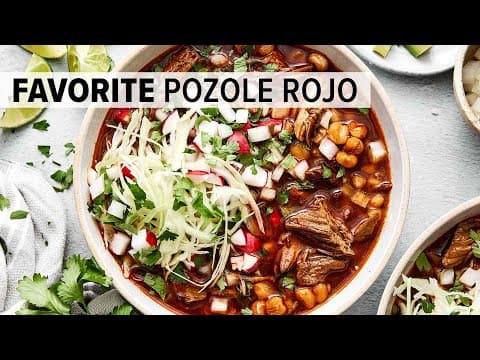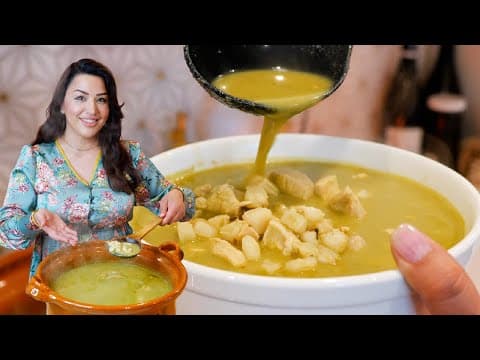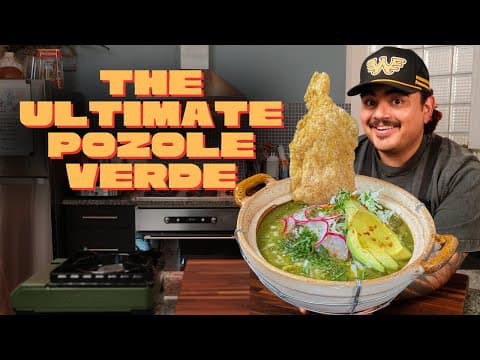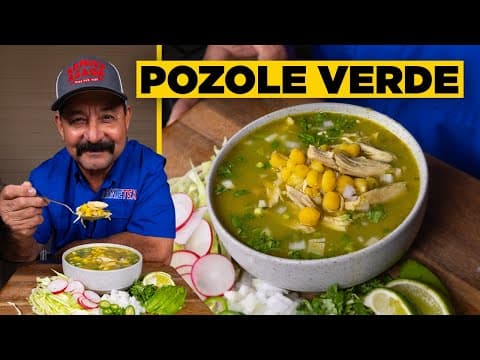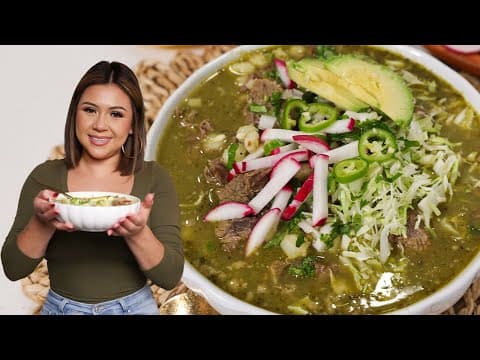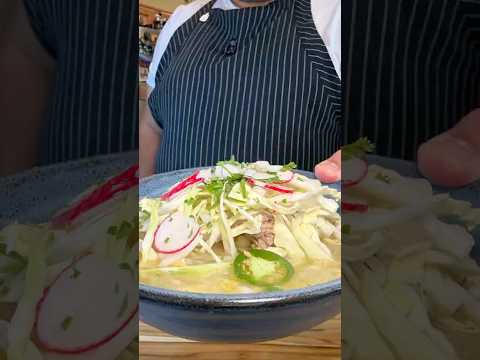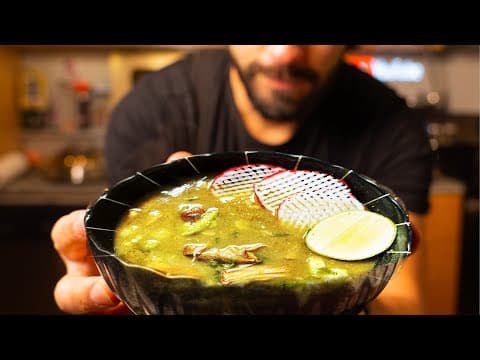
Pozole is Mexico’s iconic soup‑stew, built around tender meat, large white hominy kernels, and a vibrant broth that can be green, red, or white. It arrives at celebrations, family gatherings, and street‑food stalls, each region insisting its version is the only authentic one.
This guide pulls together eight real recipes extracted from YouTube chefs—Villa Cocina, Downshiftology, Views on the Road, Jonathan Zaragoza, ArnieTex, Cooking Con Claudia, benjamins.kitchen, and acooknamedMatt—to show exactly how they each construct their pozole, where they agree, and where they clash.
Variations and Styles of Pozole
Traditional Mexican cooks divide pozole into three color families. Verde relies on tomatillos, poblano, jalapeño, and sometimes pumpkin seeds for a fresh, herbaceous broth. Rojo gets its ruby hue from dried guajillo, ancho, and sometimes arbol chilies, creating a deeper, smoky flavor. Blanco (not represented in our video set) skips chilies entirely, letting the meat and hominy shine.
Meat choices also split the field. Chicken dominates the green versions—Villa Cocina, Views on the Road, ArnieTex—all using whole birds or leg quarters. Pork reigns in the red version from Downshiftology and the pork‑centric green recipes of Jonathan Zaragoza, benjamins.kitchen, and acooknamedMatt. Beef appears only once, in Cooking Con Claudia’s beef‑based green pozole.
Even the handling of hominy sparks debate. Some chefs, like Downshiftology, start with canned white hominy, while others, such as Jonathan Zaragoza, nixtamalize dried hominy from scratch using calcium hydroxide. The “pre‑cooked” hominy in Cooking Con Claudia’s recipe eliminates the need for a separate soaking step, but it also reduces the opportunity to rinse and skim excess starch.
How 8 YouTube cooks make Pozole
| Creator (Channel) | Style | Total Time | Serves | Distinguishing Choice |
|---|---|---|---|---|
| Villa Cocina | Verde (Chicken) | 2 h 17 m | 8 | Spatchcocked whole chicken; roasted poblano & jalapeño; pumpkin‑seed sauce |
| Downshiftology | Rojo (Pork) | 4 h | 8 | Dried guajillo & ancho chilies; orange‑juice finish; canned hominy |
| Views on the Road | Verde (Chicken) | 2 h 5 m | 6 | Chicken leg quarters + breasts; masa slurry for thickness |
| Jonathan Zaragoza | Verde (Pork & Turkey) | 18 h 25 m | 8 | Nixtamalized hominy; pork bones & pig feet; roasted turkey stock |
| ArnieTex | Verde (Chicken) | 2 h 15 m | 6 | Whole chicken shredded; grilled tomatillos; Mexican oregano |
| Cooking Con Claudia | Verde (Beef) | 3 h 20 m | 8 | Beef chuck, shank, short ribs; pre‑cooked hominy; spinach in sauce |
| benjamins.kitchen | Verde (Pork) | 4 h 30 m | 4 | Crock‑pot method; shredded pork; ready‑made tomatillo sauce |
| acooknamedMatt | Verde (Pork) | 2 h 20 m | 6 | Multiple chilies (anaheim, poblano, jalapeño, serrano); pressure‑cooked pork butt |
Below each creator is highlighted with their key ingredients, time‑saving tips, and a critical step that defines their version.
- Green Chicken Pozole (Villa Cocina) – Uses 6 lb whole chicken, roasted poblano & jalapeño, and a pumpkin‑seed‑rich green sauce. Critical step: blend the sauce until completely smooth.
- POZOLE ROJO (Downshiftology) – Features pork shoulder, dried guajillo & ancho chilies, and orange juice added at the end for brightness. Critical step: sear pork before broth.
- POZOLE VERDE (Views on the Road) – Combines chicken leg quarters and breasts, masa slurry for thickness, and a roasted tomatillo‑poblano sauce. Critical step: add masa slurry correctly to avoid lumps.
- Pozole Verde (Jonathan Zaragoza) – Starts with nixtamalized dried hominy, pork bones, pig feet, and roasted turkey stock. Critical step: nixtamalizing the corn (step 1‑2).
- Chicken Pozole Verde (ArnieTex) – Whole chicken shredded, grilled tomatillos, and a pinch of Mexican oregano. Critical step: blend salsa verde to a smooth consistency.
- Green Chile Beef Pozole (Cooking Con Claudia) – Beef chuck, short ribs, marrow bones, and pre‑cooked hominy; spinach added to the green sauce. Critical step: reserve 2 cups clear broth for the sauce.
- Pork Hominy Soup (benjamins.kitchen) – Shredded pork, canned hominy, and a ready‑made tomatillo sauce cooked in a crock‑pot. Critical step: ensure enough liquid for a soupy texture.
- Pozole Verde (acooknamedMatt) – Pork butt pressure‑cooked, multiple chilies, and canned hominy. Critical step: roast vegetables until well‑charred.
Technique Deep Dive: Consensus & Disagreements
All eight chefs agree on three core techniques: (1) start with a well‑seasoned broth, (2) add the green or red sauce after the meat is tender, and (3) finish with fresh toppings like cabbage, radish, lime, and cilantro.
Broth construction varies widely. The chicken‑based verde chefs (Villa Cocina, Views on the Road, ArnieTex) all use whole birds or large cuts, simmered 2‑2.5 hours with onion, garlic, and bay leaf. Downshiftology’s pork broth runs 4 hours, while Jonathan Zaragoza extends pork‑bone broth to over 12 hours (including a pressure‑cooker shortcut of 45 minutes). Cooking Con Claudia’s beef broth includes marrow bones and is skimmed repeatedly to keep the liquid clear.
Hominy handling is the most polarizing point. Three chefs (Downshiftology, benjamins.kitchen, acooknamedMatt) rely on canned or pre‑cooked hominy, saving 30‑45 minutes of prep. Jonathan Zaragoza insists on nixtamalizing dried hominy with food‑grade calcium hydroxide, a process that adds 2 hours of soaking, rinsing, and cooking but yields a firmer, more authentic texture. Views on the Road uses a single can of hominy, while Cooking Con Claudia uses a large 110 oz pre‑cooked package.
Chili preparation also splits the group. The green chefs roast or grill tomatillos, poblanos, and jalapeños (Villa Cocina, Views on the Road, ArnieTex, benjamins.kitchen, acooknamedMatt). Jonathan Zaragoza adds roasted turkey stock for depth, while Cooking Con Claudia incorporates spinach into the sauce for extra body. The rojo chef, Downshiftology, rehydrates dried guajillo and ancho chilies, then adds a splash of orange juice—a technique absent from the verde camps.
Temperature‑wise, only two creators use pressure cooking (Jonathan Zaragoza’s optional 45‑minute pressure step, acooknamedMatt’s 30‑minute pressure cook for pork butt). The rest rely on low‑and‑slow stovetop simmer (2‑4 hours) or crock‑pot (benjamins.kitchen’s 4.5 hours).
Frequently Asked Questions
What is the traditional meat for pozole?
Traditional pozole varies by region: chicken is common in green pozole (verdes), pork shoulder or pork butt dominates red pozole (rojos), and beef appears in some regional variations. All eight YouTube chefs follow one of these conventions.
How long should I simmer hominy for the best texture?
If using canned hominy, a brief 10‑minute simmer is enough to heat through. Dried hominy, as shown by Jonathan Zaragoza, requires nixtamalization (2 hours soaking in lime water) plus a 1‑hour boil, or a pressure‑cooker reduction to 45 minutes.
Can I make pozole without chilies?
Yes, that would be a blanco pozole, which omits the green or red sauce entirely. None of the eight recipes cover blanco, but the broth base (meat, onion, garlic, hominy) remains the same.
Is it necessary to blend the green sauce until completely smooth?
All green‑style chefs (Villa Cocina, Views on the Road, ArnieTex, Cooking Con Claudia, benjamins.kitchen, acooknamedMatt) stress a smooth sauce to avoid grainy texture. A high‑speed blender or food processor is recommended.
What is the purpose of adding pumpkin seeds to verde pozole?
Pumpkin seeds (pepitas) add a nutty richness and help thicken the green sauce. Villa Cocina and Jonathan Zaragoza both toast the seeds before blending.
Should I add lime juice before or after serving?
Most chefs (Villa Cocina, ArnieTex, Cooking Con Claudia) add a splash of lime at the end of cooking for brightness, while benjamins.kitchen recommends a final squeeze at the table for a fresher pop.
How much salt is typical for pozole broth?
Salt ranges from 1 tsp to 2 tbsp across the recipes. Downshiftology uses 3.5 tsp, Villa Cocina 2 tsp + 2 tbsp (different stages), and benjamins.kitchen only 1 tsp, showing personal preference rather than a fixed rule.
Do I need to remove the skins from pork butt?
AcooknamedMatt renders the pork fat in the pan, keeping the skin for flavor, while benjamins.kitchen shreds pre‑cooked pork without skin. Both methods work; rendering adds richness.
Can I substitute chicken for pork in a red pozole?
Technically you can, but the flavor profile changes because the red broth relies on pork fat and bone marrow for depth. Downshiftology’s recipe is built around pork shoulder and would lose some richness with chicken.
What toppings are essential for authentic pozole?
Fresh shredded cabbage, thinly sliced radishes, diced onion, lime wedges, and chopped cilantro are standard across all eight chefs. Some add avocado (benjamins.kitchen) or toasted pepitas (Villa Cocina).
Is pressure cooking a recommended shortcut for pozole?
Both Jonathan Zaragoza and acooknamedMatt use pressure cooking to reduce pork‑bone or pork‑butt cooking time to under an hour, proving it’s a reliable shortcut without sacrificing flavor.