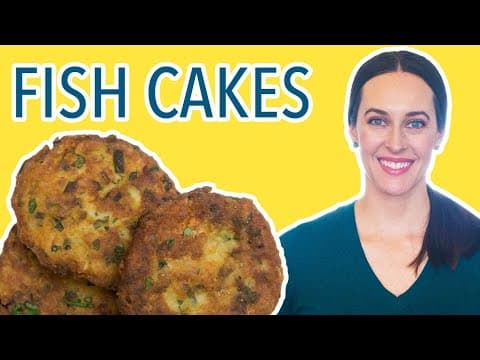
Fish cakes are a versatile comfort food that combine flaky fish with a starchy binder, herbs, and a crisp exterior. Across the globe they appear as a street‑food snack, a family dinner, or a sophisticated appetizer. The dish can be built on fresh fillets or pantry‑stable canned tuna, bound with mashed potatoes, breadcrumbs, or a hybrid of both, then finished by pan‑frying, baking, or even air‑frying.
This guide pulls together six real recipes harvested from YouTube creators—Jenna Edwards, Feed & Teach, Imran.Family Kitchen, Singapore Noodles, Dom Bill, and Joe Oxley. By laying their ingredient lists, timing, and chef tips side by side, we reveal where the methods converge and where they diverge, giving you a clear roadmap to craft fish cakes that stay together, stay flavorful, and stay crisp.
Variations and Styles of Fish Cakes
The primary editorial angle for fish cakes revolves around three decision points:
- Fresh vs. canned fish. Fresh fillets (flounder, hake, snapper, cod, salmon) bring delicate texture and a clean flavor, but require poaching or steaming to stay moist. Canned tuna offers convenience, a firmer bite, and a slightly salty backbone, as seen in Imran.Family Kitchen’s recipe.
- Potato vs. breadcrumb binding. Mashed potatoes (Jenna Edwards, Dom Bill, Joe Oxley) act as a soft, cohesive matrix that cushions the fish and adds body. Breadcrumbs (especially Japanese panko) contribute crunch and absorb excess moisture; they appear in every recipe either as a coating or mixed into the patty.
- Pan‑fry vs. bake vs. air‑fry. Traditional pan‑frying yields a caramelized crust when oil temperature is controlled (Jenna Edwards, Feed & Teach, Dom Bill). Baking or air‑frying reduces fat and can produce an even golden surface, as demonstrated by Joe Oxley’s “Scotched” version. Singapore Noodles’ fish balls are simmered then briefly fried, illustrating a hybrid technique.
Keeping the cakes from falling apart hinges on three technical tricks that appear across the videos: chilling the mixture before shaping (Edwards, Dom Bill), handling the fish gently to preserve larger flakes (Feed & Teach, Dom Bill), and maintaining a steady oil temperature to avoid soggy interiors (Edwards, Imran.Family Kitchen).
How 6 YouTube cooks make Fish Cakes
| Creator (Channel) | Style / Main Fish | Total Time | Serves | Distinguishing Choice |
|---|---|---|---|---|
| Jenna Edwards | Fresh flounder/hake/sea bass with potato‑panko mix | 1 h 5 m | 4 | Mandolin‑sliced potatoes, chill 3 hrs, fish spatula for flipping |
| Feed & Teach | Caribbean snapper with lime, mayo, and fresh herbs | 1 h 10 m | 4 | Leave larger fish flakes for texture, test oil with one cake first |
| Imran.Family Kitchen | Canned tuna with sweet corn, chili, and panko | 45 m | 4 | Smoked paprika pinch, avoid over‑mixing, uniform patty size |
| Singapore Noodles | Frozen white fish processed into balls, ice‑water bath | 45 m | 4 | Keep fish cold, blend just until smooth, gentle simmer |
| Dom Bill | Cod poached in milk, mashed with potatoes, mayo‑herb coating | 1 h 9 m | 4 | Chill mixture before shaping, mix panko with regular breadcrumbs |
| Joe Oxley | Salmon “Scotched” fish cake with boiled egg center | 1 h 37 m | 4 | Air‑fry with olive‑oil spray, wrap egg tightly in salmon‑potato mix |
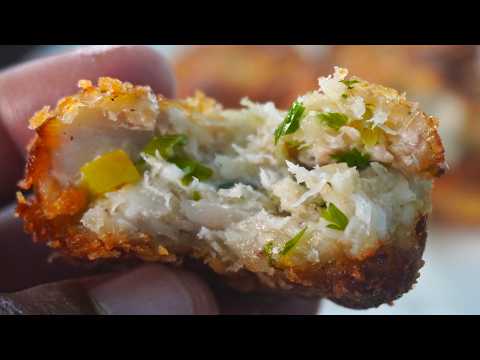
How to Make Fish Cakes - Homemade Flounder, Hake, or Sea Bass Fish Patty (Jenna Edwards) starts by poaching the fish, mashing a pound of russet potatoes, and folding in two large eggs, fresh basil, parsley, and a third‑cup of panko. The chef stresses a three‑hour chill to firm the mixture, then pan‑frying in hot oil using a thin fish spatula for a clean flip.
Caribbean Snapper Fish Cakes (Feed & Teach) steams 12 oz snapper just until opaque, mixes it with garlic, onion, green onion, thyme, sweet pepper, Scotch bonnet, parsley, lime juice, and mayonnaise. The recipe keeps some larger fish flakes for bite and finishes with a quick fry, testing oil temperature with a single cake first.
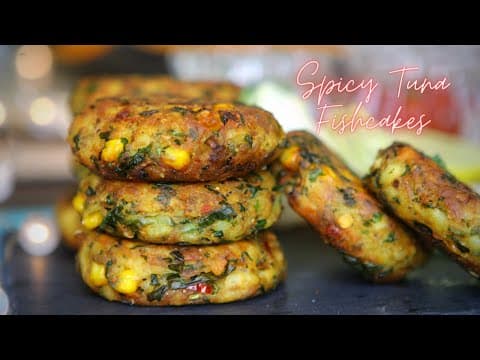
Spicy Tuna Fish Cakes with Sweet Corn and Potatoes (Imran.Family Kitchen) uses two cans of tuna, two boiled potatoes, a cup of sweet corn, one egg, half a cup of breadcrumbs, and a green chili. The chef adds cumin, paprika, and a pinch of salt, warning against over‑mixing and urging uniform patty size for even crispness.
Fishballs, Fish Cakes & Yong Tau Foo (Singapore Noodles) processes 500 g frozen white fish with ice‑cold water, salt, sugar, and white pepper in a metal‑blade processor. The mixture is kept cold, blended just smooth, then simmered gently before a brief fry; a final glaze of soy‑ginger sauce adds shine.
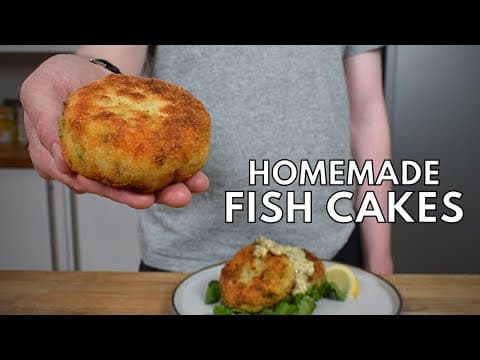
Simple and Easy Fish Cake Recipe (Dom Bill) poaches 300 g cod in whole milk with bay leaves, then combines it with two large potatoes, gherkin, shallot, parsley, chives, mayo, and prepared horseradish. After chilling, the cakes are coated with egg, a blend of panko and regular breadcrumbs, and pan‑fried, with a suggestion to add smoked paprika to the coating.
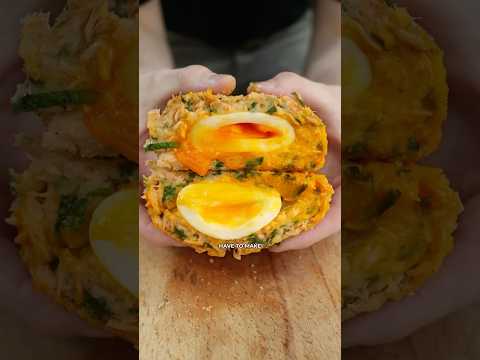
The Scotched Fish Cake 🍥 (Joe Oxley) builds a salmon‑potato mash (200 g salmon, 300 g potatoes, parsley, flour, and breadcrumbs), wraps a hard‑boiled egg, then air‑fries with a light spray of olive oil until golden. The method highlights a crisp panko crust and a smoky paprika note inside the filling.
Technique Deep Dive: Consensus and Disagreements
All six creators agree that a moist fish base is essential. Jenna Edwards, Dom Bill, and Joe Oxley each poach or simmer their fish in a liquid (water, milk, or poaching broth) before mashing, while Feed & Teach steams snapper and Singapore Noodles keeps the fish raw but ice‑cold. The canned‑tuna recipe skips any cooking step, relying on the tuna’s pre‑cooked texture.
Binding agents differ: three recipes (Edwards, Dom Bill, Oxley) rely heavily on mashed potatoes (1 lb, 2 large, 300 g respectively) as the structural matrix. Imran.Family Kitchen and Feed & Teach supplement fish with a modest breadcrumb amount (½ cup or 1 Tbsp) for surface crunch, whereas Singapore Noodles uses no visible binder, instead depending on the gelatin from cold‑water processing.
Eggs appear in five of six recipes, ranging from one large egg (Imran, Dom Bill) to two large eggs (Edwards). The egg provides emulsification and helps the patty hold together during frying.
Breadcrumb type is a point of divergence. Japanese panko is explicitly recommended by Jenna Edwards, Feed & Teach, Imran.Family Kitchen, and Joe Oxley for its airy crunch. Dom Bill blends panko with regular breadcrumbs, and Singapore Noodles omits breadcrumbs entirely.
Cooking method consensus: pan‑frying in hot oil is the most common (Edwards, Feed & Teach, Imran, Dom Bill). However, Oxley’s air‑fry approach reduces oil usage and yields a uniformly golden crust, while Singapore Noodles’ fish balls are simmered then briefly fried for a tender‑inside, crisp‑outside texture.
Temperature control is repeatedly mentioned. Edwards warns “maintain proper oil temperature; too low leads to soggy cakes, too high burns them.” Imran adds “maintaining oil temperature so the cakes become crispy without absorbing excess oil.” Both suggest a medium‑high heat (≈ 350 °F/175 °C) though exact numbers are not given in the videos.
Chilling the mixture before shaping is a shared tip between Edwards and Dom Bill, reducing break‑apart risk. Singapore Noodles emphasizes keeping the fish cold throughout processing, a similar principle applied to the mixture’s temperature stability.
Frequently Asked Questions
What type of fish works best for fish cakes?
Fresh white‑fish fillets such as flounder, hake, snapper, cod, or salmon provide a delicate texture, while canned tuna offers convenience and a firmer bite; both are used successfully by the creators featured.
Can I use frozen fish instead of fresh?
Yes—Singapore Noodles demonstrates that frozen white fish, when processed with ice‑cold water and kept chilled, yields smooth fish balls that hold together during cooking.
Do I need to poach or steam the fish before mixing?
Poaching or steaming is recommended for fresh fillets to keep them moist (Edwards, Feed & Teach, Dom Bill). Canned tuna is pre‑cooked, so no additional cooking step is required.
Is potato the only binder I can use?
Potato is a common binder that adds body and moisture, but breadcrumbs (especially panko) can be used alone or combined with potato for extra crunch, as shown in several recipes.
How much breadcrumb should I add?
Recipes range from ½ cup to 1 cup of breadcrumbs; panko is favored for its light texture. Mixing a tablespoon of panko with regular breadcrumbs, as Dom Bill suggests, balances crispness and adhesion.
What oil temperature should I aim for when pan‑frying?
All pan‑fry chefs recommend a medium‑high heat—approximately 350 °F (175 °C). This temperature creates a golden crust without soaking the cakes in oil.
Can I bake fish cakes instead of frying?
While none of the six videos bake exclusively, the air‑fry method used by Joe Oxley mimics baking by using hot air and a light oil spray, resulting in a lower‑fat, evenly browned cake.
How do I keep fish cakes from falling apart?
Key steps include chilling the fish‑potato mixture (Edwards, Dom Bill), handling the mixture gently to preserve larger fish pieces (Feed & Teach, Dom Bill), and avoiding over‑mixing, which can make the blend too soft (Imran, Feed & Teach).
Do I need to add an egg to the mixture?
Most chefs incorporate at least one egg to bind the ingredients and improve texture; only the Singapore Noodles fish balls omit egg, relying on the cold‑processed fish texture instead.
What herbs and spices are typical for fish cakes?
Common flavor boosters include fresh parsley, cilantro, basil, thyme, green onion, lime juice, cayenne, smoked paprika, cumin, and Scotch bonnet pepper for a Caribbean kick.
How long should I chill the mixture before shaping?
Jenna Edwards recommends at least three hours, while Dom Bill suggests a brief chill—anytime the mixture firms enough to handle without breaking.