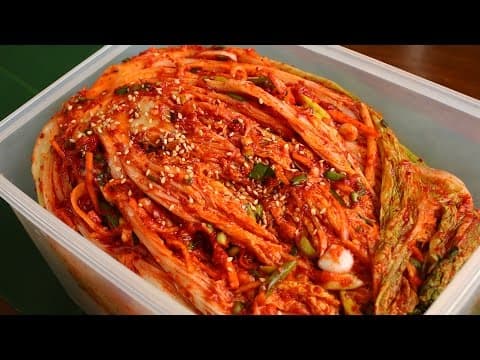
Kimchi is Korea's iconic fermented cabbage dish, prized for its tangy heat, probiotic punch, and centuries‑old cultural roots. While the core ingredients—Napa cabbage, salt, garlic, ginger, and gochugaru—remain constant, the method can vary dramatically, from whole‑cabbage (tongbaechu) preparations that age for weeks to quick, cut‑cabbage (mak) versions ready in a few days.
This guide pulls together five real recipes extracted from YouTube creators—Maangchi, Joshua Weissman, Pick Up Limes, Chef Chris Cho, and Salente—to show how each chef tackles the salting stage, the fish‑sauce or vegan umami swap, and the timing of fermentation. By comparing the actual ingredient lists, prep times, and chef tips, you get a definitive, data‑driven picture of modern kimchi making.
Variations and Styles of Kimchi
The most visible split in kimchi styles is tongbaechu (whole‑cabbage) versus mak (cut) kimchi. Maangchi’s “Traditional kimchi recipe (Tongbaechu‑kimchi)” follows the classic whole‑cabbage method, salting an entire 6‑lb head for two hours before rinsing and stuffing each leaf. Chef Chris Cho and Joshua Weissman both cut the cabbage into quarters or large pieces, preserving leaf integrity while allowing faster brine penetration—an approach often called mak kimchi.
Salting techniques also differ. Maangchi uses 0.5 cup kosher salt for a 6‑lb cabbage, while Pick Up Limes recommends 25 g coarse sea salt for a 1 kg head, and Joshua Weissman calls for 1/4 cup kosher salt on a single large head. The ratio of salt to cabbage weight hovers around 2 % to 3 % by weight, a range that balances moisture extraction with flavor without over‑salting.
Vegan swaps are highlighted in Pick Up Limes’ recipe, where soy sauce, miso, and vegetable broth replace fish sauce, providing umami without animal products. Chef Chris Cho still uses shrimp paste and fish sauce, while Maangchi relies on the traditional Korean gochugaru and a modest amount of sugar for depth.
Fermentation timing is another point of divergence. Maangchi suggests a multi‑day fermentation with daily pressing for the first two days, aiming for a 3‑to‑7‑day room‑temperature period before refrigeration. Joshua Weissman’s total time includes a five‑day fermentation window (PT5DT2H17M), while Pick Up Limes lists a 50‑hour (just over two days) fermentation, reflecting a quicker, cooler approach. Salente’s sandwich kimchi is essentially a quick‑pickled version, using a 1‑hour brine and a brief sous‑vide step.
How 5 YouTube Cooks Make Kimchi
Below is a side‑by‑side comparison of the five creators, each linked to their full recipe on YTRecipe.
| Creator (Channel) | Style | Total Time | Serves | Distinguishing Choice |
|---|---|---|---|---|
| Maangchi | Tongbaechu (whole cabbage) | PT4H54M | 10 | Rice‑flour porridge, 2 hr salt, daily pressing |
| Joshua Weissman | Mak (cut cabbage) | PT5DT2H17M | 8 | Heavy salting, daikon & pear, optional kelp |
| Pick Up Limes | Vegan mak | PT50H45M | 6 | Soy sauce + miso broth, toasted gochugaru |
| Chef Chris Cho | Mak with shrimp paste | PT1H40M | 12 | Korean pear & apple blend, 30‑min brine |
| Salente | Quick‑pickled sandwich kimchi | PT1H7M | 1 | Sous‑vide at 90 °C, cheese‑laden sandwich |
All five creators begin with the essential salting step, but the duration and technique vary. Maangchi and Joshua Weissman both emphasize a thorough salt soak—Maangchi for two hours, Weissman until the cabbage releases liquid (often 30‑45 minutes). Pick Up Limes massages the cabbage with coarse sea salt and lets it sit until the leaves soften, typically 1‑2 hours. Chef Chris Cho follows a 30‑minute soak, while Salente’s sandwich version uses a brief 1‑hour vacuum‑seal brine before sous‑vide.
Ingredient highlights illustrate each chef’s personality. Maangchi adds sweet rice flour and brown sugar to create a thick, glossy paste that stabilizes the fermentation. Joshua Weissman layers fresh Asian pear and daikon for crisp texture and subtle sweetness, plus an optional kelp splash for marine depth. Pick Up Limes substitutes 2 Tbsp soy sauce, 1 Tbsp miso, and 2 Tbsp vegetable broth, delivering a fully vegan umami base. Chef Chris Cho incorporates shrimp paste and a higher ratio of gochugaru (2 cups) for a bold, spicy kick. Salente’s sandwich recipe is less about fermentation and more about quick pickling, using apple cider vinegar and a trio of cheeses for richness.
Technique Deep Dive: Consensus and Disagreements
Salting ratios. Across the board, chefs use roughly 2‑3 % salt by weight of cabbage. Maangchi’s 0.5 cup kosher salt (≈150 g) on 6 lb cabbage (≈2.7 kg) is about 5.5 % by volume but aligns with the weight‑based guideline because kosher salt crystals are larger. Joshua Weissman’s 1/4 cup (≈60 g) on a single large head (~1.5 kg) is ~4 % by weight. Pick Up Limes’ 25 g on 1 kg is exactly 2.5 %.
Salt timing. Maangchi insists on a full 2‑hour salt rest before rinsing, while Weissman emphasizes “heavily salting and resting” until the cabbage sweats, which can be 30‑45 minutes. Pick Up Limes treats the salting as a massage step, not a timed rest, but still rinses thoroughly to avoid over‑salting. Chef Chris Cho’s 30‑minute soak is the shortest, reflecting a quicker turnover. Salente’s method skips traditional brining entirely, opting for a vacuum‑seal with a small amount of water and vinegar.
Paste construction. Traditional paste (Maangchi) includes a rice‑flour porridge boiled for 9 minutes, providing a sticky matrix that binds the vegetables. Weissman, Pick Up Limes, and Cho all blend garlic, ginger, and gochugaru into a smooth paste, but only Maangchi and Weissman add a sweet component (brown sugar or pear). Pick Up Limes uses miso and soy sauce for depth, while Cho adds shrimp paste for a marine note.
Fermentation environment. Maangchi and Weissman both press the kimchi down daily for the first two days, ensuring submersion and even fermentation. Pick Up Limes recommends a single press after mixing and a room‑temperature period of about 48 hours, then refrigeration. Chef Chris Cho suggests firm packing but does not call for daily pressing, relying on the high salt content to keep the mixture submerged. Salente’s sandwich kimchi is not fermented; it is cooked sous‑vide for 12 minutes at 90 °C, then served immediately.
Temperature control. None of the creators specify a precise fermentation temperature, but standard Korean practice is 18‑22 °C (64‑72 °F). Salente’s sous‑vide step is the only explicit temperature (90 °C) and is used for cooking the pickled vegetables rather than fermenting them.