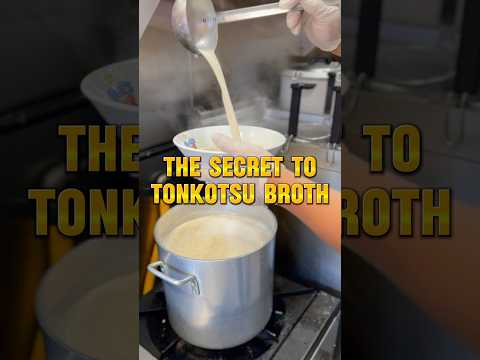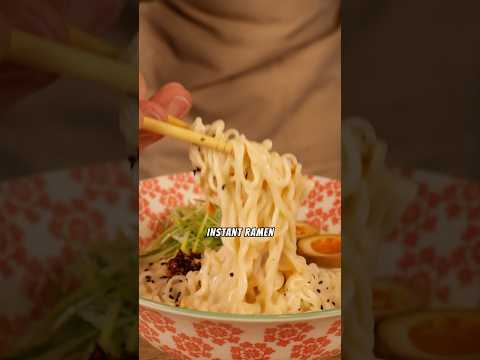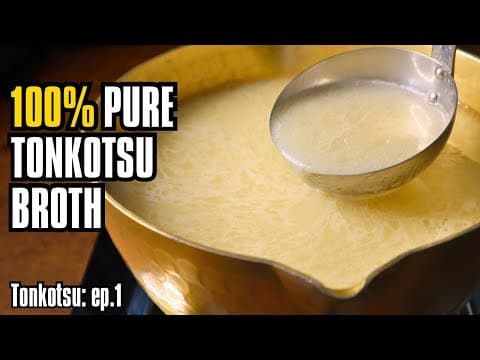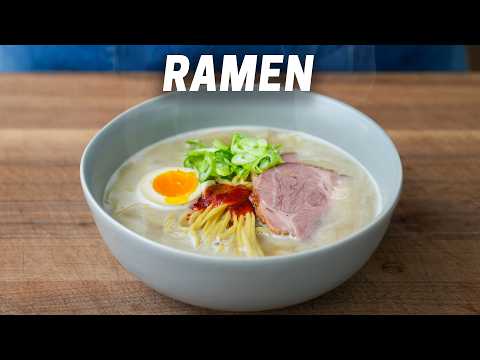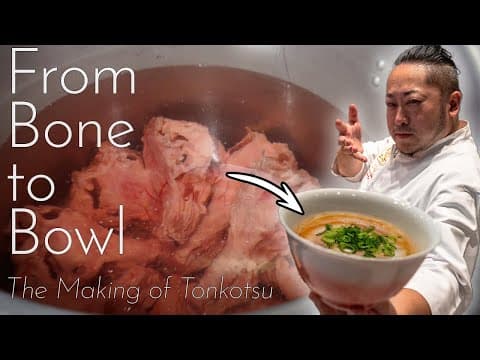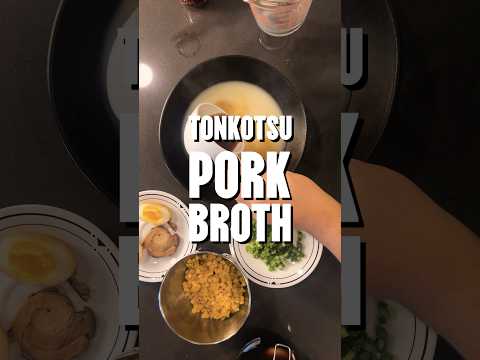
Tonkotsu Ramen Broth is the rich, milky base that defines Hakata‑style ramen. It is created by extracting collagen, marrow, and fat from pork bones over hours of gentle simmer, then emulsifying the rendered fat back into the liquid for a velvety mouthfeel. This guide pulls together eight real recipes extracted from YouTube creators—including what Will eats, Duke’s Ramen, Way of Ramen, Joe Oxley, Regional Food Japan, Brian Lagerstrom, an unknown channel, and JAPAN LOVEWalker—to show exactly how each chef builds that signature white broth.
While the core idea—bones, water, low heat, and time—remains constant, the details diverge dramatically. Some chefs roast their bones, others use a pressure cooker; some simmer for 12 hours, others finish in 20 minutes with instant noodles. By laying the data side‑by‑side, you can decide which method fits your schedule, equipment, and flavor goals.
Variations and Styles of Tonkotsu Ramen Broth
The editorial angle for this guide is threefold: (1) Rolling‑boil emulsification—the practice of maintaining a gentle rolling boil that continuously agitates fat droplets, encouraging a stable emulsion; (2) 12‑hour versus shortcut methods—comparing traditional marathon simmering with pressure‑cooker or instant‑ramen hacks; and (3) Bone selection—how the type of pork bone (neck, femur, spine, knuckle, trotters, or even skull) influences collagen yield, flavor depth, and mouthfeel.
Across the eight videos, you’ll see classic Hakata‑style bone mounds, Western‑inspired butter finishes, and even a gelatin‑boosted instant‑ramen shortcut. Each variation reflects a different balance of time, equipment, and culinary philosophy.
How 8 YouTube Cooks Make Tonkotsu Ramen Broth
Below is a quick‑look table that summarizes each creator’s approach. Click the recipe titles for the full YTRecipe conversion.
| Creator (Channel) | Style | Total Time | Serves | Distinguishing Choice |
|---|---|---|---|---|
| what Will eats | Traditional 12‑hour simmer with roasted neck bones & pig's feet | 19 h 45 m | 4 | Roasting bones + kombu & bonito flakes for layered umami |
| Duke’s Ramen | Medium‑length 11‑hour simmer, pressure‑cooker optional | 11 h | 4 | Pressure cooker shortcut (2‑3 h) while keeping pork femur & knuckle bones |
| Way of Ramen | Beginner‑friendly 5½‑hour hybrid (soak + pressure) | 5 h 30 m | 4 | Multiple water volumes listed; pressure cooking for rapid collagen extraction |
| Joe Oxley | Instant‑ramen upgrade (20 min) | 20 m | 1 | Gelatin powder + soy milk to mimic emulsion in minutes |
| Regional Food Japan | Ex‑ramen‑chef 15‑hour “just bones and water” | 15 h 20 m | 8 | Butter knob added at serving for silkiness |
| Brian Lagerstrom | Hard‑core 8‑hour 41‑minute with alkaline soda | 8 h 41 m | 4 | Baking soda turned into sodium carbonate for noodle‑friendly broth |
| Unknown | Pressure‑cooker tonkotsu trio (2 h 10 m) | 2 h 10 m | 6 | Emphasis on not boiling kombu; blending pork fat for creaminess |
| JAPAN LOVEWalker | Three‑day Hakata‑style bone mound | 9 h 35 m | 4 | Bone mound creates a central heat zone and surface‑hole visual cue |
Below is a deeper dive into each creator’s method, highlighting ingredients, critical steps, and chef tips that set their broth apart.
what Will eats – Homemade Pork Bone Ramen Broth (Tonkotsu Style)
Serves 4; total time 19 h 45 m. The recipe starts with 2 lb pork neck bones and 1 lb pig’s feet, soaked overnight, then roasted at 400 °F for 30 minutes. A low simmer with 12 cups water, cabbage, onion, garlic, dried shiitake, kombu, bonito flakes, and soy sauce follows. Key tips: roasting adds a roasted depth; a dried sardine added in the second hour boosts umami. Critical steps include soaking to maximize collagen, maintaining a low simmer for clarity, and regular skimming.
Duke’s Ramen – Tonkotsu Ramen Broth
Serves 4; total time 11 h. Uses a mix of pork femur, knuckle, and neck bones (total 5.5 lb). After blanching, bones are roasted at 425 °F for 30 minutes, then simmered low for 8‑10 hours with ginger, garlic, and green onions. Chef tips suggest a splash of soy or miso at the end and a pressure‑cooker shortcut (2‑3 h) for a similarly creamy texture. Critical steps mirror the traditional approach: blanch, low simmer, and foam skimming.
Way of Ramen – Beginner Recipe for a Rich and Creamy Tonkotsu Ramen
Serves 4; total time 5 h 30 m. The recipe lists a confusing series of water volumes (3 L, 4 L, 3.5 L, 1 L) alongside 2 kg pork bones, onion, garlic, cabbage, and shoyu. The chef stresses cold‑water soaking, a small sake addition to the tare, and adding aromatics only in the final hour to preserve pork purity. Critical steps: soak bones to remove myoglobin, pre‑boil for scum removal, and pressure‑cook for rapid flavor extraction.
Joe Oxley – Ultimate Creamy Tonkotsu Instant Ramen Upgrade
Serves 1; total time 20 minutes. This shortcut uses a single packet of instant tonkotsu ramen, 100 g pork collar, ginger, garlic, miso, gelatin powder, soy milk, and chili crisp. The gelatin and soy milk create a quick emulsion that mimics the creamy mouthfeel of a long‑simmered broth. Chef tips include using high‑quality pork collar, rinsing noodles in ice water, and finishing with sesame oil.
Regional Food Japan – Just Need Bones and Water: Tonkotsu Broth Recipe by an ex‑ramen chef
Serves 8; total time 15 h 20 m. The minimalist list is 1 kg pork spine bones, 1 kg pork knuckle bones, and 5 L cold water. After a 6‑hour soak, the bones are pre‑boiled and discarded, then simmered gently for 8 hours with occasional stirring. Unique tips: use a wooden spatula to avoid pot damage, partially cover the pot, and finish with a knob of unsalted butter for extra mouthfeel.
Brian Lagerstrom – Rich and Creamy Tonkotsu Ramen (with Noodle Recipe)
Serves 4; total time 8 h 41 m. This hard‑core version combines 5 lb pork neck bones, 2 lb pork trotters, 1 lb pork fatback, kombu, bonito flakes, dried anchovies, shiitake, soy sauce, and sugar. A standout step is baking baking soda to create sodium carbonate, which gives noodles a firm bite and a slight yellow hue. Pressure‑cooking the bones accelerates collagen breakdown, and the final broth is emulsified with an immersion blender.
Unknown – Quick Ramen Trio: Shoyu, Spicy Miso, and Pressure Cooker Tonkotsu
Serves 6; total time 2 h 10 m. While the primary focus is a ramen trio, the tonkotsu component relies on pressure‑cooking pork fat and blending it into the broth for creaminess. The recipe warns not to boil kombu (it turns bitter) and emphasizes whisking miso off‑heat. Critical steps include avoiding kombu boil, miso whisking, and fat blending.
JAPAN LOVEWalker – How Tonkotsu is Made: Three Days to Make Tokyo's Best Hakata Ramen
Serves 4; total time 9 h 35 m. This Hakata‑style method uses 5 lb pork skull bones, 1 lb back fat, and a “bone mound” technique that creates a central heat zone and a visible surface hole. The broth is enriched with yobi‑moshi (previous day’s broth), kombu, garlic, ginger, soy sauce, and an egg. Chef tips stress cold‑water start, gentle simmer after fat returns, and using the surface‑hole size as a visual cue for readiness.
Technique Deep Dive: Consensus and Disagreements
All eight creators agree on three core technical pillars:
- Cold‑water start: Every recipe begins with cold water to draw out collagen and prevent premature protein coagulation.
- Skimming foam: Regular removal of scum keeps the broth from turning cloudy and bitter.
- Low, rolling simmer: A gentle boil (≈90‑95 °C) agitates fat droplets enough to form a stable emulsion without breaking down the gelatin.
Where they diverge:
- Time: Traditional marathon simmer ranges from 8 hours (Regional Food Japan) to nearly 20 hours (what Will eats). Shortcut methods compress this to 2‑3 hours (pressure cooker) or 20 minutes (instant ramen).
- Bone type: Neck bones and femur bones dominate the classic style, while skull bones (JAPAN LOVEWalker) and spine+knuckle bones (Regional Food Japan) provide more marrow. Fatback and pork collar are added for extra richness in the hard‑core and instant‑ramen versions.
- Emulsification aids: Baking soda (Brian Lagerstrom) creates an alkaline environment that stabilizes fat; gelatin powder (Joe Oxley) does the same in a minute; butter (Regional Food Japan) adds a finishing silk.
- Flavor boosters: Kombu and bonito flakes appear in three recipes, soy sauce or miso at the end in two, and a small piece of dried sardine in what Will eats.
Rolling‑boil emulsification is most effective when the broth is kept at a steady, gentle boil for at least the last 2‑3 hours of cooking. This continuous agitation allows the liberated pork fat to disperse into micron‑sized droplets that stay suspended, giving the broth its characteristic milky opacity. Shortcuts that skip the prolonged rolling boil (e.g., instant ramen) must artificially introduce emulsifiers (gelatin, soy milk) to achieve a similar texture.
Frequently Asked Questions
What is Tonkotsu Ramen Broth?
Tonkotsu Ramen Broth is a creamy, white pork‑bone stock made by extracting collagen, marrow, and fat from pork bones over a long, low simmer, then emulsifying the fat back into the liquid for a rich, silky texture.
How long should I simmer Tonkotsu broth for the best flavor?
Traditional methods recommend 8‑12 hours of low simmer. The longest recipe in this guide (what Will eats) runs nearly 20 hours, while the shortest authentic‑style version (Regional Food Japan) simmers 8 hours. Shortcuts can reduce time to 2‑3 hours with a pressure cooker, but the depth of flavor will differ.
Can I make Tonkotsu broth in a pressure cooker?
Yes. Both Duke’s Ramen and the Unknown channel suggest pressure‑cooking the bones for 2‑3 hours, which extracts collagen quickly while still allowing a creamy texture after a brief rolling boil.
Which pork bones produce the richest Tonkotsu broth?
Pork neck bones, femur bones, and pork skull bones are prized for their high marrow content. Brian Lagerstrom also adds pork trotters and fatback for extra gelatin and fat, while Regional Food Japan relies on spine and knuckle bones for a leaner profile.
Do I need to roast the bones before simmering?
Roasting is optional but recommended. what Will eats, Duke’s Ramen, and Brian Lagerstrom all roast their bones (400‑425 °F for 30 minutes) to develop a deeper, roasted flavor and richer color.
What is the rolling‑boil emulsification technique?
It involves keeping the broth at a gentle rolling boil (≈90‑95 °C) during the final 2‑3 hours of cooking. This constant agitation disperses fat droplets into a stable emulsion, creating the characteristic milky appearance of Tonkotsu.
Can I add kombu or bonito flakes to Tonkotsu broth?
Yes. Kombu and bonito flakes add subtle umami and are used by what Will eats, Brian Lagerstrom, and the Unknown channel. However, the Unknown channel warns not to boil kombu, as it can become bitter.
How does baking soda affect Tonkotsu broth?
Baking soda, when baked to form sodium carbonate, raises the broth’s pH, helping fat emulsify more readily and giving noodles a firmer, slightly yellow texture. Brian Lagerstrom uses this technique as part of his hard‑core method.
Is adding butter to Tonkotsu broth authentic?
Butter is not traditional in Japanese tonkotsu, but Regional Food Japan adds a knob of unsalted butter just before serving for extra silkiness, reflecting a modern, Western‑influenced twist.
Can I make a Tonkotsu broth using instant ramen packets?
Joe Oxley demonstrates a 20‑minute shortcut that combines an instant tonkotsu packet with pork collar, gelatin, and soy milk to mimic the creamy texture. While fast, it lacks the depth of a long‑simmered stock.
What is the “bone mound” technique used by JAPAN LOVEWalker?
The bone mound stacks pork skull bones and back fat in a compact heap, creating a central heat zone that concentrates flavor. The size of the surface hole that forms during simmer is used as a visual cue for readiness.
Do I need to skim the broth constantly?
Regular skimming of foam and scum, especially during the first hour, prevents bitterness and keeps the broth clear. All eight creators list skimming as a critical step.