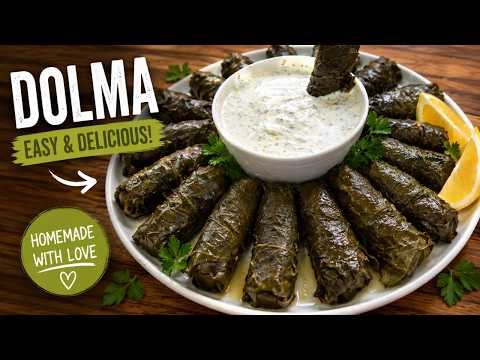
Dolma d'oignon
Dolma d'oignon is a medium Iranian recipe that serves 4. 180 calories per serving. Recipe by Oum Arwa on YouTube.
Prep: 45 min | Cook: 45 min | Total: 1 hr 50 min
Cost: $8.66 total, $2.16 per serving
Ingredients
- 5 unités Oignons moyens ou gros (de taille moyenne ou gros)
- 150 g Viande hachée (agneau ou bœuf)
- 100 g Riz blanc (précuit avant d'être ajouté à la farce)
- 2 unités Tomates fraîches (coupées en petits dés)
- 1 unité Petit oignon (finement haché pour la farce)
- 3 gousses Gousses d'ail (écrasées)
- 2 c. à soupe Coriandre fraîche (hachée)
- 2 c. à soupe Persil frais (haché)
- 1 c. à café Paprika doux (doux)
- 0.5 c. à café Poivre noir moulu (au goût)
- 0.5 c. à café Cumin moulu (au goût)
- 0.5 c. à café Graines de coriandre moulues (au goût)
- à discrétion à discrétion Sel (au goût)
- 2 c. à soupe Huile d'olive (extra vierge)
- 100 g Purée de tomate (ou concentré dilué)
- 1 c. à soupe Jus de citron frais (pour l'acidité)
- 50 ml Eau (ajuster la consistance de la sauce si besoin)
Instructions
Préparer les oignons
Inciser chaque oignon en profondeur jusqu’au centre, les plonger dans une casserole d’eau bouillante et laisser cuire 10 à 15 minutes jusqu’à ce qu’ils soient tendres. Égoutter, laisser refroidir légèrement puis retirer les couches extérieures pour obtenir des feuilles d’oignon souples.
Time: PT15M
Précuire le riz
Rincer le riz à l’eau froide, le mettre dans une casserole avec 1,5 fois son volume d’eau, porter à ébullition puis cuire 8‑10 minutes à feu moyen. Égoutter et réserver.
Time: PT10M
Préparer la farce
Dans un grand bol, mélanger la viande hachée, le riz précuit, les dés de tomate, l’oignon finement haché, l’ail écrasé, la coriandre et le persil hachés, le paprika, le poivre, le cumin, la coriandre moulue, le sel, l’huile d’olive et la purée de tomate. Bien homogénéiser.
Time: PT10M
Farcir les oignons
Déposer une cuillère à soupe de farce au centre de chaque feuille d’oignon et replier les bords pour enfermer la garniture, en laissant le sommet légèrement ouvert. Répéter jusqu’à épuisement de la farce.
Time: PT5M
Disposer et napper
Dans le plat à four, placer les cœurs d’oignon (les parties non farcies) au fond. Disposer les oignons farcis, côté fermé vers le bas. Dans un bol, mélanger la purée de tomate, le jus de citron, un filet d’huile d’olive, une pincée de sel, du cumin, du paprika et de la coriandre en poudre. Ajouter un peu d’eau si la sauce paraît trop épaisse, puis verser uniformément sur les oignons.
Time: PT5M
Cuisson
Couvrir le plat avec une feuille de papier cuisson puis enfourner à 180°C (350°F) pendant 40‑45 minutes à feu moyen‑doux, jusqu’à ce que les oignons soient tendres et la farce bien cuite.
Time: PT45M
Temperature: 180°C
Finition
Sortir le plat, arroser d’un filet d’huile d’olive, parsemer de coriandre fraîche hachée et servir avec des quartiers de citron.
Time: PT5M
Nutrition Facts
- Calories
- 180
- Protein
- 10 g
- Carbohydrates
- 20 g
- Fat
- 8 g
- Fiber
- 2 g
Dietary info: gluten-free, dairy-free, nut-free, high-protein, low-carb, low-calorie, very-low-calorie, low-fat
Last updated: July 18, 2026