Vietnamese Nem Chua (Quick-Cured Pork Ham Version)
Vietnamese Nem Chua (Quick-Cured Pork Ham Version) is a medium Vietnamese recipe that serves 10. 120 calories per serving.
Prep: 1 hr | Cook: 30 min | Total: 14 hrs 30 min
Cost: $82.38 total, $8.24 per serving
Ingredients
- 900 g Cooked pork ham (giăm bông/hem) (Remove thick outer skin before use; yields about 800g after trimming)
- 200 g Pork skin (bì heo), shredded (Pre-shredded bì available at Asian markets; can use up to 300g for more texture)
- 100 g Sugar (Divided: 50g for marinade, 50g for pork skin)
- 1 tbsp Garlic powder (Or use fresh minced garlic (about 2 tbsp))
- 1.25 cups Red rice vinegar (Red Wine Vinegar or Taiwanese Red Vinegar) (1 cup for ham marinade, 1/4 cup for pork skin; Red Wine Vinegar preferred for mild flavor)
- 8 drops Red food coloring (5 drops for ham, 3 drops for pork skin; optional for color)
- 0.5 tbsp Toasted rice powder (thính) (Adds aroma and helps binding)
- 2 whole Fresh red chili (Sliced for garnish and wrapping)
- 4 cloves Fresh garlic (Sliced for garnish and wrapping)
- 10 leaves Vietnamese coriander (rau răm) (For garnish and wrapping)
- 1 roll Plastic wrap (cling film) (For shaping and wrapping nem)
Instructions
Trim and Slice Ham
Remove the thick outer skin from the cooked pork ham. Slice the ham into thin strips, then cut into small matchstick-sized pieces. Place in a large mixing bowl.
Time: PT10M
Prepare Marinade for Ham
In a bowl, combine 1 cup warm water (cooled to room temperature), 50g sugar, 1 tbsp garlic powder (or 2 tbsp fresh minced garlic), and 1 cup red rice vinegar. Stir to dissolve. Add 5 drops red food coloring for color.
Time: PT5M
Marinate Ham Overnight
Pour the marinade over the sliced ham. Mix well. Cover tightly with plastic wrap and refrigerate overnight (at least 12 hours).
Time: PT12H
Temperature: 4°C
Drain and Dry Ham
The next day, drain the ham in a colander. Do not rinse. Let it air dry for 10 minutes to remove excess moisture.
Time: PT10M
Blanch Pork Skin
Bring a small pot of water to about 50°C (just warm, not boiling). Briefly blanch the shredded pork skin for 10-15 seconds, then remove immediately and drain.
Time: PT5M
Temperature: 50°C
Season Pork Skin
In a bowl, toss the drained pork skin with 50g sugar, 1 tbsp minced garlic, 1/4 cup red rice vinegar, and 3 drops red food coloring. Mix well.
Time: PT5M
Quickly Sauté Pork Skin
Heat a small saucepan over medium heat. Add the seasoned pork skin and a splash of water. Sauté for 2-3 minutes until the gelatin is released and the mixture is sticky. Do not overcook.
Time: PT5M
Temperature: Medium heat
Add Toasted Rice Powder
Remove pork skin from heat. Sprinkle in 0.5 tbsp toasted rice powder (thính) and mix well.
Time: PT2M
Pulse Ham in Food Processor
Pulse the marinated, drained ham in a food processor or blender until roughly chopped (do not puree).
Time: PT3M
Combine Ham and Pork Skin
Transfer the chopped ham to a mixing bowl. Cut the pork skin into shorter lengths if needed. Add the pork skin mixture to the ham and mix thoroughly by hand or with a spatula.
Time: PT5M
Shape and Chill Nem
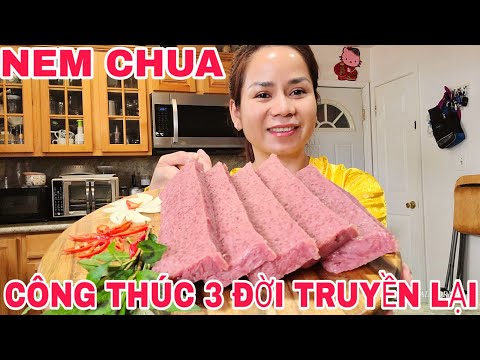
Line a small container with plastic wrap. Press the nem mixture firmly into the container, smoothing the top. Cover and refrigerate for at least 4 hours to set.
Time: PT4H
Temperature: 4°C
Cut and Wrap Nem
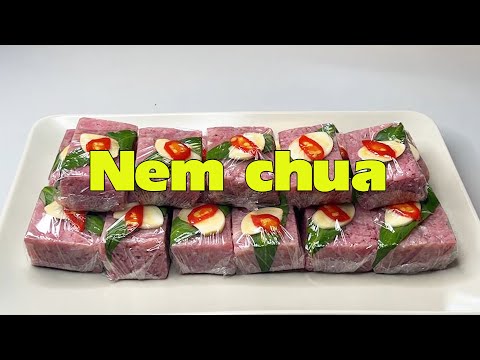
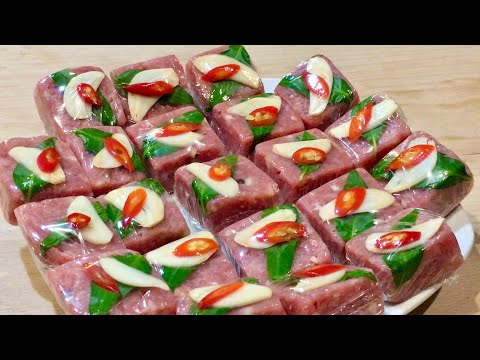
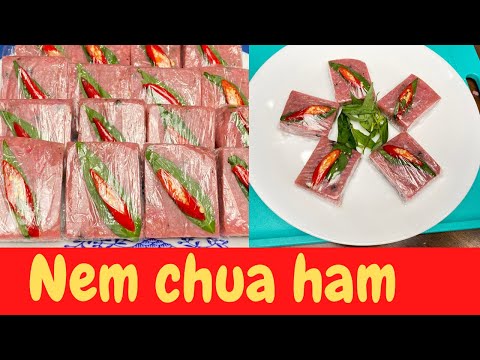
Remove the chilled nem from the container. Cut into small rectangles or squares as desired. For each piece, lay a square of plastic wrap, place a slice of chili, a garlic slice, and a rau răm leaf in the center, then top with a piece of nem. Wrap tightly.
Time: PT15M
Serve or Store
Arrange wrapped nem on a platter. Serve chilled as a snack or appetizer. Store leftovers in the refrigerator.
Time: PT5M
Nutrition Facts
- Calories
- 120
- Protein
- 9g
- Carbohydrates
- 6g
- Fat
- 6g
- Fiber
- 0.5g
Dietary info: Gluten-Free, Dairy-Free, low-carb, low-calorie, very-low-calorie, low-fat
Allergens: Pork, Garlic
Ingredient Substitutions
- Instead of Cooked pork ham (giăm bông/hem): Cooked pork loin, Canadian bacon
- Instead of Pork skin (bì heo), shredded: None (essential for texture)
- Instead of Sugar: Cane sugar, Caster sugar
- Instead of Garlic powder: Fresh minced garlic
- Instead of Red rice vinegar (Red Wine Vinegar or Taiwanese Red Vinegar): Red wine vinegar, Apple cider vinegar (for color, add food coloring)
- Instead of Red food coloring: Beet juice (for natural color)
- Instead of Toasted rice powder (thính): Ground toasted rice (homemade)
- Instead of Fresh red chili: Bird's eye chili, Jalapeño
- Instead of Fresh garlic: Shallot
- Instead of Vietnamese coriander (rau răm): Cilantro, Thai basil
- Instead of Plastic wrap (cling film): Parchment paper
Equipment Needed
- Large mixing bowls
- Sharp knife
- Cutting board
- Measuring cups and spoons
- Small saucepan
- Colander or sieve
- Food processor or blender
- Tongs (optional)
- Plastic wrap (cling film)
- Serving platter (optional)
Critical Steps — Do Not Skip
- Trim and slice ham carefully to remove tough skin.
- Marinate ham overnight for full flavor and safety.
- Blanch pork skin briefly to sanitize without losing crunch.
- Do not overcook pork skin when sautéing.
- Chill nem thoroughly to set before cutting and wrapping.
Chef Tips from the Video
- Use high-quality cooked ham for best flavor.
- Red rice vinegar gives a more authentic flavor and color.
- Do not skip the toasted rice powder for aroma and texture.
- Wrap nem tightly to prevent drying out.
- Serve with extra rau răm, chili, and garlic for garnish.
Troubleshooting
Nem is too salty.
Use less ham or rinse briefly before marinating. Do not add extra salt.
Nem does not hold together.
Ensure pork skin is sautéed until sticky and mixture is pressed firmly before chilling.
Nem is too soft.
Chill longer to set. Reduce water in marinade if necessary.
Nem lacks pink color.
Add a few more drops of red food coloring to marinade and pork skin.
Storage
Refrigerator: Store wrapped nem chua in an airtight container for up to 10 days.
Freezer: Not recommended; texture will suffer.
Room temperature: Safe for up to 4 hours at cool room temperature; refrigerate promptly.
Make-Ahead Tips
- Marinate the ham the night before for best flavor.
- Nem can be made up to 3 days in advance and stored in the fridge.
Frequently Asked Questions
What is the cultural significance and history of Vietnamese Nem Chua (Quick-Cured Pork Ham Version) in Vietnamese cuisine?
Vietnamese Nem Chua is a traditional fermented pork snack that dates back to rural households where pork was preserved with salt, garlic, and spices. The quick‑cured pork ham version modernizes the classic method by using cooked ham and pork skin, making it safer for home cooks while retaining the tangy, garlicky flavor beloved in Vietnamese street food culture.
What are the traditional regional variations of Vietnamese Nem Chua in Vietnam?
In northern Vietnam, Nem Chua is often smaller, heavily seasoned with garlic and chili, and wrapped in banana leaves. Central regions add lemongrass and fermented shrimp paste, while southern styles may be larger, sweeter, and sometimes include coconut milk. The quick‑cured version adapts these flavors using readily available ingredients like red rice vinegar and garlic powder.
What is the authentic traditional way Vietnamese Nem Chua (Quick-Cured Pork Ham Version) is served in Vietnamese culture?
Traditionally, Nem Chua is sliced thin and served with fresh herbs such as cilantro, mint, and sliced chilies, alongside pickled vegetables and a side of fish sauce for dipping. The quick‑cured pork ham version follows the same presentation, often accompanied by sliced cucumber and a drizzle of additional red rice vinegar for extra tang.
During which occasions or celebrations is Vietnamese Nem Chua (Quick-Cured Pork Ham Version) traditionally associated in Vietnamese culture?
Nem Chua is a staple snack at family gatherings, Lunar New Year (Tết), and outdoor picnics because its tangy flavor pairs well with other festive dishes. The quick‑cured version is especially popular at parties and street‑food fairs where preparation time needs to be short but authentic taste is still desired.
How does Vietnamese Nem Chua (Quick-Cured Pork Ham Version) fit into the broader Vietnamese cuisine tradition?
Vietnamese cuisine balances fresh herbs, bright acidity, and savory umami, and Nem Chua embodies this harmony with its garlicky, sour, and slightly spicy profile. The quick‑cured ham adaptation reflects Vietnam’s modern culinary trend of preserving traditional flavors while using safer, faster methods for home cooking.
What are the authentic traditional ingredients for Vietnamese Nem Chua versus the acceptable substitutes used in the Vietnamese Nem Chua (Quick-Cured Pork Ham Version)?
Traditional Nem Chua uses raw pork shoulder, pork skin, fermented shrimp paste, garlic, sugar, and rice wine. The quick‑cured version substitutes raw pork with cooked pork ham (giăm bông) and uses shredded pork skin (bì) along with garlic powder, sugar, and red rice vinegar, providing a safer yet flavorful alternative.
What other Vietnamese dishes pair well with Vietnamese Nem Chua (Quick-Cured Pork Ham Version)?
Nem Chua pairs nicely with fresh spring rolls (gỏi cuốn), Vietnamese papaya salad (gỏi đu đủ), and grilled pork skewers (thịt nướng). Its bright acidity also complements richer dishes like bánh mì with pâté or a bowl of pho, offering a contrast that refreshes the palate.
What makes Vietnamese Nem Chua (Quick-Cured Pork Ham Version) special or unique in Vietnamese cuisine?
This version is unique because it eliminates the risky raw‑meat fermentation step while still delivering the signature tangy, garlicky flavor through a quick pickling process. Using cooked pork ham and pork skin makes it accessible to home cooks worldwide, preserving the cultural essence without compromising food safety.
What are the most common mistakes to avoid when making Vietnamese Nem Chua (Quick-Cured Pork Ham Version)?
Common errors include using too much sugar, which can mute the tanginess, and insufficient mixing of the garlic powder, leading to uneven flavor. Over‑packing the mixture into the mold can prevent proper fermentation, and neglecting to refrigerate the wrapped Nem Chua for at least 24 hours can result in a bland texture.
Can I make Vietnamese Nem Chua (Quick-Cured Pork Ham Version) ahead of time and how should I store it?
Yes, you can prepare the quick‑cured Nem Chua up to three days in advance. Keep the wrapped logs in an airtight container in the refrigerator; the flavors will deepen, and the texture will firm up. For longer storage, freeze the wrapped pieces, then thaw in the fridge before serving.
What does the YouTube channel that posted the Vietnamese Nem Chua (Quick-Cured Pork Ham Version) video specialize in?
The YouTube channel focuses on modern adaptations of classic Asian street foods, providing step‑by‑step tutorials that prioritize safety and accessibility for home cooks. It often highlights quick‑cure techniques and ingredient swaps that retain authentic flavors.
What is the cooking philosophy and style of the YouTube channel that posted the Vietnamese Nem Chua (Quick-Cured Pork Ham Version) video?
The channel’s philosophy centers on preserving traditional taste while simplifying preparation, using readily available ingredients and clear visual instructions. Its style blends detailed close‑up shots with concise narration, making complex Vietnamese techniques approachable for a global audience.
Last updated: August 21, 2026