Chicken biryani is a celebrated one‑pot wonder that layers fragrant basmati rice with spiced chicken, creating a symphony of aroma, texture, and flavor. Across South Asia, families and restaurants each claim a secret—whether it is the exact spice blend, the method of par‑cooking the rice, or the way the pot is sealed for the final "dum" steam finish.
This guide pulls together eight real recipes extracted from YouTube cooking channels, including PICHEKKISTA BOBBY FOOD, Curries With Bumbi, COOKWARE ON FIRE, Ruby Ka Kitchen, Andy Cooks, Unknown, Malangi Restaurant, and Sheetal's Kitchen - Gujarati. By aligning their ingredient lists, cooking times, serving sizes, and chef tips, we reveal where tradition meets convenience.
Variations and Styles of Chicken Biryani
The eight creators illustrate three broad stylistic families:
- Hyderabadi‑style biryani – Emphasises a long marination, layered rice that is par‑boiled to 70‑80 % doneness, and a sealed dum that may last 20‑30 minutes. Andy Cooks and PICHEKKISTA BOBBY FOOD fall here.
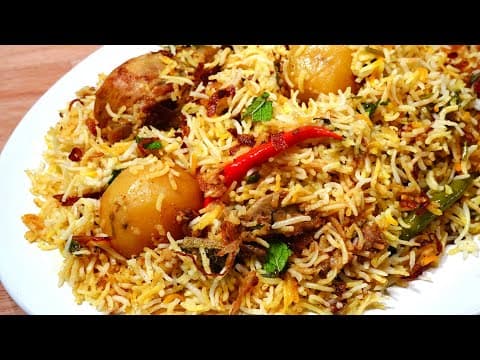
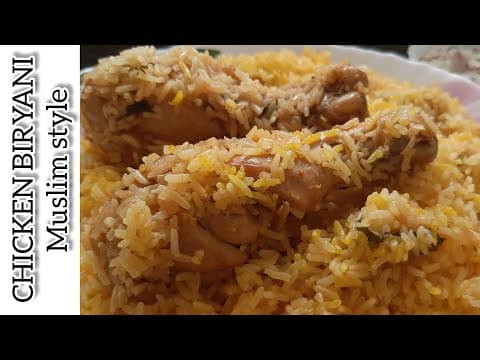
- Muslim‑style / Karachi‑style biryani – Often richer in oil or ghee, uses whole‑spice toasts, and may incorporate potatoes or extra heat from Kashmiri chilies. COOKWARE ON FIRE and Malangi Restaurant showcase this.
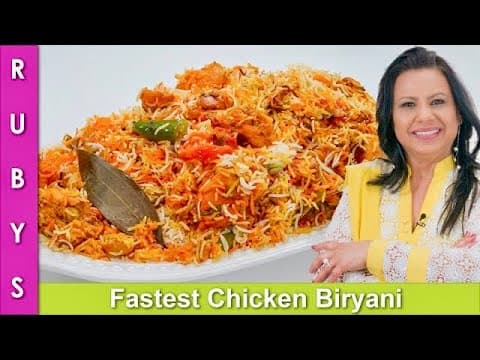
- Quick or shortcut biryani – Reduces total time by using higher heat, pressure cooking, or fewer steps while still aiming for layered flavor. Ruby Ka Kitchen, Curries With Bumbi (with a 30‑minute “step‑by‑step” focus), and the pressure‑cooker version belong to this group.
All eight recipes share the critical rice stage: soak the basmati, then par‑cook (often to 70‑80 % doneness) before layering. The dum technique varies—some seal with a tight‑fitting lid, others use dough or a heavy Dutch oven, and the pressure‑cooker version skips dum entirely, relying on sealed pressure.
How 8 YouTube cooks make Chicken Biryani
Below is a side‑by‑side snapshot of each creator’s approach. Click any recipe title to view the full text transcription on YTRecipe.
| Creator (Channel) | Style | Total Time | Serves | Distinguishing Choice |
|---|---|---|---|---|
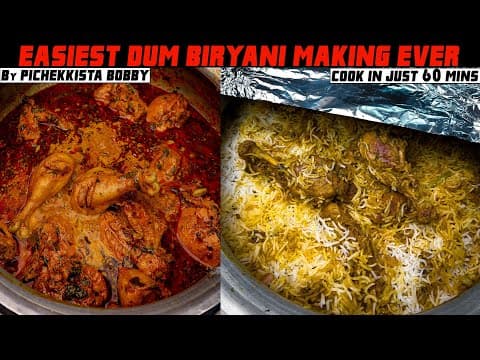
| PICHEKKISTA BOBBY FOOD | Traditional Hyderabadi | 1 h 38 m | 5 | Heavy‑bottomed pot for deep dum, saffron milk added in final layer |
| Curries With Bumbi | Step‑by‑step Hyderabadi (educational) | 3 h 55 m | 9 | Extensive ginger‑garlic paste, flame tamer to prevent scorching |
| COOKWARE ON FIRE | Muslim‑style | 1 h 47 m | 6 | Lemon juice in rice layer, dough seal if lid not tight |
| Ruby Ka Kitchen | 30‑minute quick | 38 m | 4 | High‑heat caramelized top, optional ghee finish |
| Andy Cooks | Hyderabadi classic | 2 h 30 m | 6 | Aged basmati, whole‑spice crush before use |
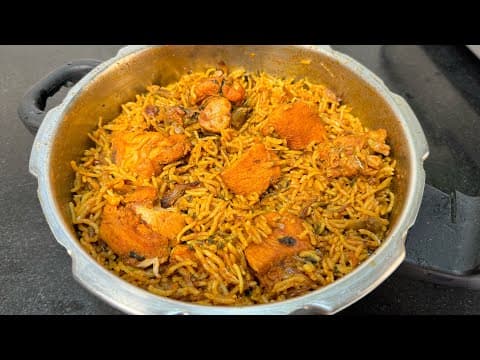
| Unknown | Pressure‑cooker no‑dum | 50 m | 4 | Same cup for rice and water, rest 5‑10 min after cooking |
| Malangi Restaurant | Karachi style | 1 h 53 m | 6 | Fried potato slices layered on top for crunch |
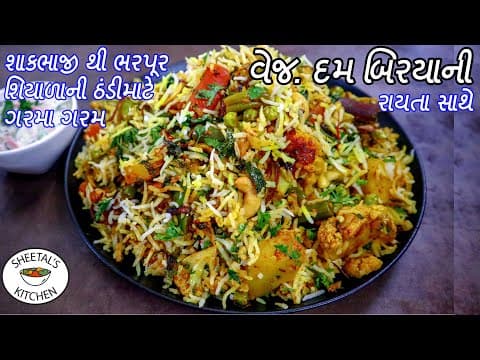
| Sheetal's Kitchen - Gujarati | Vegetable dum (vegetarian reference) | 2 h 5 m | 4 | Rose water or kewra essence in final layer |
All eight creators start with a spice base—either whole spices toasted in oil or a pre‑made masala. The chicken is typically marinated in yogurt or plain curd, which tenderizes and adds tang. The rice is soaked for at least 30 minutes, then par‑cooked. The final assembly alternates rice and chicken, often with fried onions (birista) and fresh herbs, before sealing for dum.
Technique Deep Dive: Par‑cooking Rice, Layering, and Dum
Par‑cooking (rice stage) – Six of the eight recipes specify a 70‑80 % doneness target. PICHEKKISTA BOBBY FOOD, Curries With Bumbi, Andy Cooks, and the pressure‑cooker version all note “par‑cooking to 70 %”. COOKWARE ON FIRE and Malangi Restaurant explicitly say “only 80 % cooked before layering”. The vegetable dum recipe simply says “par‑cook to the right doneness”, which aligns with the 70‑80 % range. This consensus shows that fully cooked rice will become mushy during dum.
Layering order – Most chefs place a thin layer of rice at the bottom, then chicken (or vegetables), then another rice layer, finishing with fried onions and a garnish of saffron milk or rose water. Ruby Ka Kitchen, despite the quick format, still follows this pattern, adding a high‑heat blast at the end to caramelize the top.
Dum sealing – Traditional dum uses a heavy‑bottomed pot with a tight‑fitting lid (PICHEKKISTA BOBBY FOOD). COOKWARE ON FIRE suggests sealing with dough if the lid is loose. The pressure‑cooker version skips dum entirely, relying on the sealed cooker to trap steam. Ruby Ka Kitchen uses a “tight seal” on a regular pot and adds a 5‑second high‑heat blast for a crisp top.
Heat management – The longest‑duration recipes (Curries With Bumbi at 3 h 55 m) use a flame tamer to keep the bottom from scorching. The quick version (Ruby Ka Kitchen) uses medium‑high heat for browning then reduces to low for the final seal. The pressure‑cooker method uses medium heat to bring to pressure, then a natural release.
Key spices and aromatics – Whole spices (cinnamon, cloves, cardamom, star anise) appear in every traditional recipe. The quick versions rely more on pre‑blended masalas (Shan Biryani Masala, Kashmiri chili powder) to save time. The Karachi style adds extra fennel and cumin powders, while the vegetarian version emphasizes biryani masala and optional rose/kewra essence.
When you synthesize these data points, a reproducible “best‑practice” emerges: soak basmati 30 min, toast whole spices briefly, marinate chicken ≥30 min in yogurt + salt + acid, par‑cook rice to 70 % (≈6‑7 min boiling), layer with fried onions, seal tightly, and cook on low flame for 20‑30 min (or 5 min in a pressure cooker). Adjust oil/ghee ratios to taste—traditional Muslim style uses up to 300 ml oil, while the quick version works with 2 tbsp oil plus a ghee finish.
Frequently Asked Questions
What is the main difference between Hyderabadi and Muslim‑style chicken biryani?
Hyderabadi biryani typically emphasizes a long marination in yogurt, aged basmati, and a delicate dum sealed in a heavy pot, while Muslim‑style biryani often uses more oil or ghee, adds lemon juice to the rice layer, and may include potatoes for texture.
Can I make chicken biryani in a pressure cooker without the traditional dum?
Yes. The “15‑Minute Pressure Cooker Chicken Biryani” recipe shows that a sealed pressure cooker can produce fluffy rice and tender chicken in under an hour, eliminating the need for a separate dum step.
How long should I soak basmati rice before par‑cooking?
All eight creators recommend at least 30 minutes of soaking; this softens the grains and ensures even par‑cooking to the 70‑80 % doneness target.
Is it necessary to use saffron in chicken biryani?
Saffron is optional but highly prized for color and aroma; three recipes (PICHEKKISTA BOBBY FOOD, Ruby Ka Kitchen, and the vegetarian version) add saffron strands soaked in warm milk during the final layering.
What temperature should the dum be cooked at?
Most videos suggest low flame (around 90‑120 °C on a stovetop) for the final 20‑30 minutes, allowing steam to infuse without burning the bottom layer.
Why do some recipes add lemon juice to the rice layer?
Lemon juice adds a subtle tang that balances the richness of the spices and oil, a tip highlighted by COOKWARE ON FIRE.
Do I need to fry onions to a dark brown for biryani?
No. The consensus is to fry onions to a golden brown; over‑cooking to dark brown can introduce bitterness, as warned by both COOKWARE ON FIRE and Andy Cooks.
Can I substitute chicken thighs with bone‑in pieces for a quicker version?
Yes. The quick Ruby Ka Kitchen recipe uses bone‑in pieces and still achieves flavor in under 40 minutes, though traditional versions prefer thigh meat for juiciness.
How much oil is typical for a traditional chicken biryani?
Traditional Muslim‑style recipes use up to 300 ml vegetable oil, while Hyderabadi styles often rely on a mix of oil and ghee, ranging from 2 tbsp to 4 tbsp plus a tablespoon of ghee for richness.
Is it okay to add potatoes to chicken biryani?
Potatoes are a hallmark of Karachi‑style biryani; Malangi Restaurant layers fried potato slices on top for extra crunch, but they are not required in Hyderabadi or quick versions.