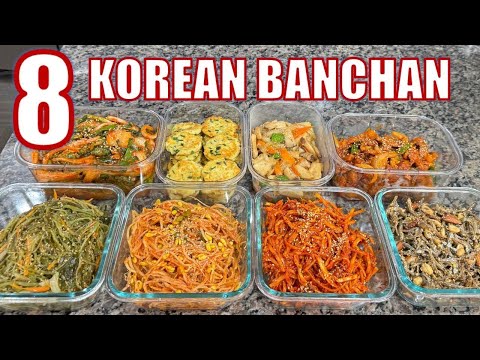
20 Essential Korean Banchan (Side Dishes) for the Week
20 Essential Korean Banchan (Side Dishes) for the Week is a expert Korean recipe that serves 4. 350 calories per serving.
Prep: 4 hrs 30 min | Cook: 2 hrs | Total: 7 hrs 30 min
Cost: $77.30 total, $19.33 per serving
Ingredients
- 1 bunch (about 300g) bunch Spinach (Korean winter spinach preferred) (Can use regular spinach if Korean variety unavailable)
- 1/2 head (about 500g) head Napa cabbage (Fresh, not pre-shredded)
- 300g g Bean sprouts (soybean sprouts preferred) (Soybean sprouts are crunchier than mung bean sprouts)
- 2 medium each Cucumber (English or Persian cucumbers preferred for fewer seeds)
- 2 large each Carrot
- 200g g Baby king oyster mushrooms (Or regular king oyster mushrooms, sliced)
- 2 large each Onion
- 1 large each Leek
- 1 bulb (about 10 cloves) bulb Garlic (Use fresh, not pre-minced)
- 100ml ml Sesame oil (High quality, toasted preferred)
- 4 tbsp tbsp Sesame seeds (Toasted preferred)
- as needed Salt (Kosher or sea salt preferred)
- as needed (about 1 cup total) cup Sugar
- 8 tbsp tbsp Korean chili flakes (gochugaru) (Essential for authentic flavor)
- 4 tbsp tbsp Korean chili paste (gochujang) (Fermented, sweet and spicy)
- 2 tbsp tbsp Fermented soybean paste (doenjang) (Stronger than miso)
- 2 cups cup Soy sauce (Regular Korean or Japanese soy sauce)
- 1 cup cup Vinegar (Rice vinegar preferred)
- 2 large each Potatoes
- 1 block (400g) block Tofu (firm)
- 10 each Eggs
- 200g g Minced beef
- 200g g Minced pork
- 8 each Small hot dogs
- 1 each Red bell pepper
- 1 each Green bell pepper
- 2 medium each Eggplant
- 2 each Avocado (Slightly underripe for pickling)
- 200g g Salmon (sashimi grade) (For soy marinade)
- 50g g Dried anchovies (small)
- 100g g Walnuts
- 8 each Shiitake mushrooms (fresh or dried, rehydrated)
- 4 medium each Tomatoes (For soy pickling)
- 2 bunches bunch Green onions
- as needed Black pepper
- 1 cup cup Flour (for dredging)
- as needed Water
- 1 tbsp tbsp Lemon juice or vinegar (for avocado)
Instructions
Prep and blanch spinach, bean sprouts, and napa cabbage
Bring a large pot of salted water to a boil. Cut napa cabbage into 4cm chunks. Blanch napa cabbage for 1-2 minutes, transfer to ice bath. Blanch bean sprouts for 1 minute, transfer to ice bath. Blanch spinach for 30 seconds, transfer to ice bath. Drain and gently squeeze out excess water (do not crush).
Time: PT30M
Temperature: 100°C
Prepare garlic and dressing for namul
Peel and mince garlic using the side of a knife for best flavor (avoid pre-minced garlic). For spinach: mix 1 tsp minced garlic, 1 tbsp sesame oil, 1/2 tsp salt, 1 tsp sesame seeds. For bean sprouts: 1 tbsp gochugaru, 1 tsp salt, 1 tbsp soy sauce, 1 tsp minced garlic, 2 tsp sesame seeds, 1 tbsp sesame oil. For napa cabbage: 1 tbsp doenjang, 1 tsp sugar, 1 tbsp soy sauce, 1 tbsp sesame oil. Toss each vegetable with its dressing by hand.
Time: PT20M
Cucumber salad (Oi Muchim)
Score cucumbers lightly, cut into quarters, rub with 1 tsp salt, let sit 10 minutes. Rinse and drain. Slice 1/2 onion. Mix sauce: 2 tbsp gochugaru, 1 tbsp gochujang, 1 tbsp vinegar, 1 tbsp soy sauce, 1 tbsp sugar, 1 tsp minced garlic, 1 tsp sesame oil. Toss cucumbers and onions with sauce. Let marinate in fridge for at least 4 hours (best overnight).
Time: PT25M
Julienne carrots and sauté
Julienne carrots using a mandoline or knife. Sauté in a nonstick pan with a pinch of salt and a little oil until just tender, about 2-3 minutes. Finish with a drizzle of sesame oil off heat.
Time: PT10M
Temperature: Medium-high heat
Sauté mushrooms
Slice mushrooms. Sauté in oil until browned. Push to side, add 1 tbsp soy sauce and 1/2 tbsp sugar to pan, let caramelize, then toss mushrooms back in. Finish with sesame seeds.
Time: PT10M
Temperature: Medium-high heat
Walnut and anchovy stir-fry
Toast walnuts and small dried anchovies in a dry pan over medium-low heat until golden and fragrant. Push to side, add 1 tbsp soy sauce and 1 tbsp sugar, let caramelize, add 1 tbsp water if needed to deglaze. Toss everything together with 1 tbsp sesame seeds.
Time: PT10M
Temperature: Medium-low heat
Sausage and veggie stir-fry
Slice hot dogs and bell peppers. Sauté onions and peppers in oil until translucent. Add hot dogs, stir-fry 2 minutes. Add 2 tbsp ketchup, 1 tbsp soy sauce, black pepper. Stir and cook until glazed.
Time: PT10M
Temperature: Medium-high heat
Yukjeon (beef and walnut stir-fry)
Sauté sliced onions and leeks in oil until soft. Add minced beef, break up, season with 1 tsp salt and black pepper. When nearly cooked, add 1 tbsp minced garlic, 2 tbsp soy sauce, 2 tbsp gochujang, cook until glossy. Add 2 tbsp sugar, stir, finish with walnuts.
Time: PT15M
Temperature: Medium-high heat
Soy sauce marinade for proteins and vegetables
Combine 1 cup soy sauce, 1/4 cup sugar, 1.5 cups water, 4 crushed garlic cloves, 1/2 onion, 1/2 leek in a saucepan. Simmer until vegetables are soft and flavors meld (about 10 minutes). Cool completely.
Time: PT15M
Temperature: Simmer
Marinate avocado, salmon, and egg yolks
Slice avocado (slightly underripe) into 1cm slices, place in container, add 1 tbsp lemon juice or vinegar. Slice salmon into thick pieces, lay on top of onions in container. Separate egg yolks and gently place in container. Pour cooled marinade over all. Add sliced chilies if desired. Marinate in fridge at least 4 hours (egg yolks can be eaten after 6-8 hours).
Time: PT20M
Temperature: 4°C
Soy-pickled green onions and tomatoes
Cut green onions to fit container. Score tomatoes, blanch in boiling water until skins split, shock in ice water, peel. Combine 1/2 cup soy sauce, 1/2 cup sugar, 1/2 cup vinegar, 1 cup water, bring to a boil. Pour hot marinade over green onions and peeled tomatoes in container. Cool, then refrigerate.
Time: PT20M
Temperature: Boil
Braised potatoes (Gamja Jorim)
Cube potatoes. Sauté in oil until lightly browned. Add 1 tbsp sugar, 4 tbsp soy sauce, 1 cup water. Simmer until potatoes are tender and most liquid is absorbed.
Time: PT20M
Temperature: Medium heat
Braised tofu
Cut tofu into squares, salt both sides, let sit 10 minutes. Pat dry. Sear in hot nonstick pan with oil until golden on both sides. Add sliced onions and other vegetables. Add 4 tbsp soy sauce, 2 tbsp gochugaru, 1 tbsp sugar, 1 tbsp minced garlic, 1/2 cup water. Cover and simmer 10 minutes.
Time: PT25M
Temperature: Medium-high heat
Microwave-steamed eggplant
Slice eggplant, place in microwave-safe bowl with 1 tbsp water. Cover and microwave 3-4 minutes until soft. Let cool. Tear into strips, squeeze out excess moisture. Toss with 2 tbsp soy sauce, 1 tsp minced garlic, 1 tbsp sesame seeds, 1 tbsp sesame oil, sliced green onions.
Time: PT10M
Temperature: Microwave (high)
Microwave-steamed egg custard (Gyeran Jjim)
Whisk 2 eggs with 1/2 tsp salt and 1 cup water until smooth. Pour into microwave-safe bowl, top with green onion and 1/2 tsp sesame oil. Microwave 3.5 minutes until just set.
Time: PT10M
Temperature: Microwave (high)
Meatball fritters (Donggeurangttaeng) and stuffed shiitake
Mix minced beef, pork, minced garlic, salt, pepper, and a little flour. Form into small meatballs (IKEA meatball size). Remove shiitake stems, dust caps with flour, press meat mixture into caps, dust again. Pan-fry meatballs and stuffed mushrooms in oil over medium-low heat, meat side down first, until golden and cooked through.
Time: PT25M
Temperature: Medium-low heat
Plating and storing
Arrange each banchan in separate containers or plates. Let cool before sealing and refrigerating. Label containers for easy access throughout the week.
Time: PT15M
Cleanup
Wash all used pots, pans, knives, cutting boards, bowls, and utensils. Wipe down counters and stove. Dry and store all equipment.
Time: PT1H
Nutrition Facts
- Calories
- 350
- Protein
- 12g
- Carbohydrates
- 40g
- Fat
- 15g
- Fiber
- 6g
Dietary info: Vegetarian options available, Dairy-free, Nut-free possible (omit walnuts), Gluten-free possible (use tamari), low-calorie, high-fiber
Allergens: Soy, Gluten (from soy sauce), Eggs, Fish (anchovies, salmon), Tree nuts (walnuts), Sesame
Ingredient Substitutions
- Instead of Spinach (Korean winter spinach preferred): Baby spinach, Swiss chard
- Instead of Napa cabbage: Savoy cabbage
- Instead of Bean sprouts (soybean sprouts preferred): Mung bean sprouts
- Instead of Cucumber: Zucchini (for a different texture)
- Instead of Carrot: Daikon radish
- Instead of Baby king oyster mushrooms: Shiitake mushrooms, Button mushrooms
- Instead of Onion: Shallots
- Instead of Leek: Green onions
- Instead of Sesame oil: Toasted walnut oil (for a different flavor)
- Instead of Sugar: Honey, Maple syrup
- Instead of Korean chili flakes (gochugaru): Crushed red pepper (not as authentic)
- Instead of Korean chili paste (gochujang): Miso + chili flakes + sugar (for a rough substitute)
- Instead of Fermented soybean paste (doenjang): Miso (less pungent)
- Instead of Soy sauce: Tamari (gluten-free)
- Instead of Vinegar: Apple cider vinegar
- Instead of Minced beef: Minced pork, Plant-based mince
- Instead of Minced pork: Minced beef, Plant-based mince
- Instead of Small hot dogs: Chicken sausage, Vegan sausage
- Instead of Red bell pepper: Yellow bell pepper
- Instead of Green bell pepper: Red bell pepper
- Instead of Salmon (sashimi grade): Tuna, Firm white fish
- Instead of Walnuts: Pecans
- Instead of Shiitake mushrooms (fresh or dried, rehydrated): Button mushrooms
- Instead of Flour (for dredging): Cornstarch, Rice flour
Equipment Needed
- Large pot
- Colander
- Mixing bowls
- Chef's knife
- Cutting board
- Mandoline slicer (with julienne teeth) (optional)
- Nonstick skillet or frying pan
- Paper towels
- Tongs
- Measuring spoons and cups
- Lock-and-lock containers or glass jars
- Microwave-safe bowl
- Steamer basket (optional for eggplant) (optional)
- Whisk or chopsticks
- Spatula
- Small saucepan
Critical Steps — Do Not Skip
- Blanching vegetables properly to preserve color and crunch.
- Using fresh garlic, pounded for maximum flavor.
- Caramelizing soy sauce and sugar for mushrooms and anchovies.
- Cooling soy marinade before pouring over raw fish or eggs.
- Searing tofu properly for best texture.
- Cooking meatballs and stuffed mushrooms slowly to ensure doneness.
Chef Tips from the Video
- Use your hands to mix and dress banchan for best flavor and texture.
- Invest in high-quality sesame oil – it makes a big difference.
- Label and date your containers for easy rotation.
- Taste and adjust seasoning as you go – Korean food is all about balance.
- Don’t be afraid to substitute vegetables based on season and availability.
Troubleshooting
Vegetables turn soggy after blanching.
Blanch in small batches and shock immediately in ice water. Do not overcook.
Tofu sticks to the pan.
Use a nonstick pan and ensure pan is hot before adding tofu. Do not move tofu until a crust forms.
Soy marinade is too salty.
Dilute with more water or add a bit more sugar to balance.
Meatballs are raw inside.
Cook on low heat for longer, cover pan if needed to steam through.
Egg custard is rubbery.
Reduce microwave time and let rest before serving.
Storage
Refrigerator: Most banchan keep 5-7 days in airtight containers.
Freezer: Meatballs, braised potatoes, and tofu can be frozen up to 1 month. Avoid freezing fresh vegetable banchan.
Room temperature: Do not store banchan at room temperature for more than 2 hours.
Make-Ahead Tips
- Most banchan taste better after a day in the fridge.
- Prepare all dressings and sauces in advance for faster assembly.
- Blanch and cool vegetables ahead of time and store undressed until ready to serve.
Frequently Asked Questions
What is the cultural significance and history of the 20 Essential Korean Banchan (Side Dishes) for the Week in Korean cuisine?
In Korean cuisine, banchan are small, shared side dishes that embody the principle of balance and variety at every meal. Historically, families prepared multiple banchan to showcase seasonal vegetables and preserve foods like kimchi, fostering communal dining. The collection of 20 essential Korean banchan reflects the tradition of having a generous assortment that can accompany rice for a full week, reinforcing hospitality and nutrition.
What are the traditional regional variations of the banchan featured in the 20 Essential Korean Banchan (Side Dishes) for the Week across different provinces of Korea?
Each Korean province has signature banchan: Jeolla is known for spicy fermented vegetables, Gyeongsang for robust soy‑based sauces, and Gangwon for simple, lightly seasoned greens. The 20 Essential Korean Banchan recipe includes variations such as Jeolla‑style kimchi cabbage and Gyeongsang‑style spicy cucumber, allowing cooks to experience regional diversity within one menu.
How is the 20 Essential Korean Banchan (Side Dishes) for the Week traditionally served in Korean households during a typical week?
In a traditional Korean household, all banchan are placed in small bowls around the central rice bowl, and each dish is replenished daily as needed. The 20 Essential Korean Banchan are prepared in bulk at the start of the week, then stored and served cold or at room temperature, providing a rotating variety that complements each main course.
On what occasions or celebrations is the collection of Korean banchan, like the 20 Essential Korean Banchan (Side Dishes) for the Week, traditionally associated in Korean culture?
Banchan are present at everyday meals, but a large assortment like the 20 Essential Korean Banchan is especially common during holidays such as Chuseok (Korean Thanksgiving) and Seollal (Lunar New Year), when families gather and share abundant side dishes to honor ancestors and celebrate abundance.
How does the 20 Essential Korean Banchan (Side Dishes) for the Week fit into the broader Korean cuisine tradition of shared meals and kimchi?
The Korean dining tradition emphasizes communal sharing, and banchan are the cornerstone of that practice. The 20 Essential Korean Banchan complement kimchi by offering contrasting textures and flavors—crunchy, salty, sweet, and umami—creating a balanced palate that exemplifies Korean culinary harmony.
What are the authentic traditional ingredients for the banchan in the 20 Essential Korean Banchan (Side Dishes) for the Week versus acceptable modern substitutes?
Authentic ingredients include Korean winter spinach (ssuk), napa cabbage, soybean sprouts, Korean cucumbers, and Korean carrots, seasoned with gochugaru, doenjang, and ganjang. Modern substitutes such as baby spinach, regular cucumbers, or soybeans can be used, but they may alter the texture and traditional flavor profile.
What other Korean dishes pair well with the 20 Essential Korean Banchan (Side Dishes) for the Week?
The 20 Essential Korean Banchan pair beautifully with classic Korean mains like bulgogi, samgyeopsal (grilled pork belly), and bibimbap, as well as with simple rice bowls and soups such as doenjang jjigae. Their variety adds depth to any Korean meal, enhancing both flavor and nutrition.
What are the most common mistakes to avoid when making the 20 Essential Korean Banchan (Side Dishes) for the Week at home?
Common errors include over‑salting the vegetables, neglecting to blanch spinach long enough, and storing wet banchan without proper drainage, which leads to sogginess. Also, using low‑quality gochugaru can diminish the authentic spicy depth of the dishes.
Why does the 20 Essential Korean Banchan (Side Dishes) for the Week recipe use blanching for spinach instead of sautéing, and what effect does this have?
Blanching Korean winter spinach preserves its vivid green color and crisp‑tender texture while removing bitterness, which sautéing can intensify. The quick cooling in ice water locks in the bright hue and ensures the spinach remains light and refreshing alongside other banchan.
Can I make the 20 Essential Korean Banchan (Side Dishes) for the Week ahead of time and how should I store each banchan for optimal freshness?
Yes, most banchan can be prepared 2–3 days in advance. Store each in airtight containers in the refrigerator; for wetter banchan, line the container with a paper towel to absorb excess moisture. Reheat only those that require warmth, while cold banchan can be served straight from the fridge.
What does the YouTube channel that posted the video titled "20 Essential Korean Banchan (Side Dishes) for the Week" specialize in?
The YouTube channel that posted the video focuses on Korean home cooking, offering step‑by‑step tutorials for traditional side dishes, main courses, and meal‑prep strategies. Its content emphasizes authentic techniques, ingredient sourcing, and batch preparation for busy households.
What is the cooking philosophy and style of the YouTube channel that posted the video "20 Essential Korean Banchan (Side Dishes) for the Week" when presenting Korean cuisine?
The channel’s philosophy centers on preserving Korean culinary heritage while making recipes accessible to a global audience. It combines meticulous technique with clear visuals, encouraging viewers to master classic banchan and adapt them for modern, time‑constrained kitchens.
Last updated: August 20, 2026