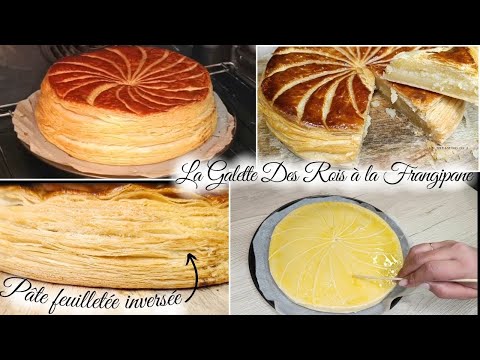
Galette à la Frangipane (Pâte feuilletée inversée)
Galette à la Frangipane (Pâte feuilletée inversée) is a intermediate French recipe that serves 6. 520 calories per serving. Recipe by Boulangerie Pas à pas on YouTube.
Prep: 6 hrs 51 min | Cook: 1 hr 20 min | Total: 8 hrs 26 min
Cost: $9.46 total, $1.58 per serving
Ingredients
- 280 g Butter (cold, cut into cubes for beurre manié)
- 120 g All-Purpose Flour (T55 or T65, for beurre manié)
- 100 g Butter (softened to spreadable consistency for dough)
- 100 ml Cold Water (room temperature)
- 12 g Salt (fine sea salt, dissolved in water)
- 2 g White Wine Vinegar (prevents oxidation of dough)
- 280 g All-Purpose Flour (T55 or T65 for the détrempe)
- 68 g Almond Flour (homemade or store‑bought, slightly coarse for texture)
- 55 g Butter (softened, for frangipane)
- 55 g Granulated Sugar
- 8 g Cornstarch
- 35 g Egg (weighed, about half a large egg, beaten)
- 40 g Pastry Cream (cold, can be homemade or store‑bought)
- 4 g Dark Rum (optional, can replace with vanilla extract (2 g))
- 60 g Egg Yolk (about 2 large yolks, for glaze)
- 40 g Milk (whole milk, for glaze)
- 5 g Sugar Syrup (boiled simple syrup, cooled)
- 10 g Powdered Sugar (for dusting the finished galette)
- 15 g Whole Almonds (toasted, for garnish)
Instructions
Préparer le beurre manié
Couper 280 g de beurre très froid en cubes, le placer dans le bol du mixeur avec 120 g de farine T55/T65. Mélanger à vitesse basse jusqu’à obtenir une pâte homogène.
Time: PT5M
Repos du beurre manié
Former une boule, l’envelopper de film alimentaire et placer au réfrigérateur pendant 1 heure.
Time: PT1H
Préparer la détrempe
Dans un bol, dissoudre 12 g de sel et 2 g de vinaigre dans 100 g d’eau froide. Ajouter 100 g de beurre ramolli, puis 280 g de farine. Mélanger à vitesse basse pendant 2 minutes jusqu’à formation d’une pâte sans seche.
Time: PT5M
Repos de la détrempe
Former une boule, l’envelopper et la placer au réfrigérateur 1 heure (en même temps que le beurre manié).
Time: PT1H
Première double tour
Étaler la détrempe en rectangle, placer le beurre manié au centre, replier en trois (tour simple) puis tourner de 90°, répéter pour obtenir une double tour (2 minutes).
Time: PT2M
Repos après le premier tour
Envelopper la pâte et laisser reposer au frais 30 minutes.
Time: PT30M
Deuxième double tour
Répéter le même processus de double tour (2 minutes).
Time: PT2M
Repos après le deuxième tour
Reposer la pâte au réfrigérateur 30 minutes.
Time: PT30M
Troisième double tour
Effectuer un troisième double tour (2 minutes).
Time: PT2M
Repos final
Envelopper et laisser reposer au frais 1 heure avant le façonnage.
Time: PT1H
Façonnage de la galette
Abaisser la pâte à 2 mm d’épaisseur, découper un cercle d’environ 18 cm, laisser une bordure de 1 cm.
Time: PT10M
Préparer la frangipane
Dans le bol du mixeur, crémer 55 g de beurre ramolli avec 55 g de sucre, ajouter 8 g de maïzena, 68 g de farine d’amande, 35 g d’œuf battu, 40 g de crème pâtissière, 4 g de rhum (ou vanille). Mixer à vitesse moyenne 5 minutes jusqu’à consistance lisse.
Time: PT5M
Assembler la galette
Étaler la frangipane uniformément sur le disque, replier la bordure pour former un rebord, marquer légèrement le centre, placer au congélateur 5 minutes pour raffermir.
Time: PT10M
Première dorure
Mélanger 60 g de jaune d’œuf, 40 g de lait et 5 g de sirop de sucre. Badigeonner la galette de l’intérieur vers l’extérieur.
Time: PT5M
Repos au frais
Laisser la galette assemblée au réfrigérateur 2 heures (minimum 2 h, idéal 4 h).
Time: PT2H
Seconde dorure et incisions
Refaire une petite dorure identique, puis, à l’aide du dos d’un couteau, tracer des incisions depuis le centre vers le bord (5‑6 rayons).
Time: PT5M
Préchauffer le four
Préchauffer le four à 190 °C (ventilateur).
Time: PT15M
Temperature: 190°C
Cuisson principale
Enfourner la galette sur une plaque posée sur des petits cercles (3,5‑4 cm) pour éviter qu’elle colle. Cuire 40 minutes, puis badigeonner de sirop et poursuivre 10 minutes supplémentaires.
Time: PT55M
Temperature: 190°C
Finition
Sortir du four, saupoudrer de sucre glace et disposer les amandes grillées au centre.
Time: PT10M
Service
Couper la galette en parts égales et déguster tiède ou à température ambiante.
Time: PT5M
Nutrition Facts
- Calories
- 520
- Protein
- 6 g
- Carbohydrates
- 45 g
- Fat
- 30 g
- Fiber
- 3 g
Dietary info: vegetarian, contains nuts, contains alcohol (optional)
Allergens: gluten, dairy, eggs, nuts
Ingredient Substitutions
- Instead of Butter: Unsalted butter
- Instead of All-Purpose Flour: Pastry flour
- Instead of Butter: Unsalted butter
- Instead of White Wine Vinegar: Apple cider vinegar (same amount)
- Instead of All-Purpose Flour: Pastry flour
- Instead of Almond Flour: Ground almonds
- Instead of Butter: Unsalted butter
- Instead of Cornstarch: Tapioca starch
- Instead of Egg: Egg substitute (same weight)
- Instead of Pastry Cream: Vanilla custard
- Instead of Dark Rum: Vanilla extract
- Instead of Egg Yolk: Egg substitute (same weight)
- Instead of Milk: Plant‑based milk
- Instead of Whole Almonds: Sliced almonds
Equipment Needed
- Stand Mixer
- Mixing Bowls
- Rolling Pin
- Ruler / Spacers (1‑8 mm)
- Parchment Paper
- Baking Sheet
- Oven (fan‑forced)
- Freezer
- Refrigerator
- Kitchen Scale
- Pastry Brush
- Knife (sharp, for scoring)
- Piping Bag or Small Spatula (optional)
Critical Steps — Do Not Skip
- Préparer le beurre manié très froid
- Respecter les temps de repos entre chaque tour de lamination
- Ne pas ajouter trop de farine pendant le laminage
- Peser précisément l’œuf pour la frangipane
- Refroidir la galette avant la cuisson finale
Chef Tips from the Video
- Utiliser un couteau à lame dentelée pour les incisions afin d’obtenir des bords nets.
- Le repos au congélateur de 5 minutes avant la cuisson finale rend la découpe plus précise.
- Pour un goût plus prononcé, remplacer le rhum par 2 g d’extrait de vanille.
Troubleshooting
Le feuilletage ne lève pas, la galette reste dense.
Vérifier que le beurre était bien froid et que les temps de repos entre les tours ont été respectés. Ne pas trop travailler la pâte et éviter d’ajouter trop de farine.
La frangipane est trop liquide.
Peser exactement 35 g d’œuf et s’assurer que le beurre est bien crémé. Ajouter 5 g supplémentaires de maïzena si nécessaire.
La pâte colle au rouleau.
Saupoudrer légèrement de farine uniquement sur la surface de travail et le rouleau, pas sur la pâte. Utiliser les spacers pour contrôler l’épaisseur.
Storage
Refrigerator: Conserver la galette non cuite, bien emballée, jusqu’à 3 jours.
Freezer: Après cuisson, laisser refroidir complètement puis emballer hermétiquement. Se conserve 1 mois.
Room temperature: À consommer le jour même, sinon réfrigérer.
Make-Ahead Tips
- Le beurre manié et la détrempe peuvent être préparés la veille et conservés au frais.
- La frangipane se garde 24 h au réfrigérateur dans un récipient hermétique.
- Après le premier repos, la pâte peut être congelée; laisser décongeler au réfrigérateur avant la cuisson.
Frequently Asked Questions
What is the cultural significance and history of Galette à la Frangipane (Pâte feuilletée inversée) in French cuisine?
Galette à la Frangipane (Pâte feuilletée inversée) traces its roots to the classic French galette des rois, a cake traditionally served for Epiphany. Over time, bakers refined the pastry with a lighter inverted puff pastry and a rich almond frangipane filling, making it a celebrated dessert for holidays and special occasions across France.
What are the traditional regional variations of Galette à la Frangipane (Pâte feuilletée inversée) in France?
In the Alsace region, the galette often incorporates a hint of kirsch in the frangipane, while in Provence a splash of orange blossom water is added for a fragrant twist. Northern French versions may use a slightly sweeter almond paste and a richer butter layer, reflecting local dairy traditions.
How is Galette à la Frangipane (Pâte feuilletée inversée) authentically served in the Île-de-France region of French culture?
In Île-de-France, the galette is typically served warm, dusted with powdered sugar, and accompanied by a dollop of lightly sweetened crème fraîche. It is often presented on a decorative platter alongside a cup of freshly brewed French coffee or a glass of sweet white wine.
What occasions or celebrations is Galette à la Frangipane (Pâte feuilletée inversée) traditionally associated with in French culture?
The galette is most closely linked to the Epiphany celebration on January 6th, where a hidden fève (figurine) is hidden inside the pastry. It is also enjoyed during family gatherings, Christmas, and other festive moments as a symbol of sharing and good luck.
How does Galette à la Frangipane (Pâte feuilletée inversée) fit into the broader French pastry tradition?
Galette à la Frangipane (Pâte feuilletée inversée) exemplifies the French mastery of layered butter pastry and almond-based fillings, two pillars of classic French pâtisserie. Its technique showcases the balance between light, flaky dough and a rich, moist almond cream, a hallmark of French dessert craftsmanship.
What are the authentic traditional ingredients for Galette à la Frangipane (Pâte feuilletée inversée) versus acceptable substitutes in French cooking?
Traditional ingredients include unsalted French butter, all‑purpose flour, cold water, fine sea salt, and a frangipane made from almond flour, butter, sugar, and eggs. Acceptable substitutes are European-style margarine for butter (though flavor changes) and almond extract instead of fresh almond flour for a quicker version.
What are the most common mistakes to avoid when making Galette à la Frangipane (Pâte feuilletée inversée) at home?
Common pitfalls include over‑working the dough, which can melt the butter and destroy the layers, and under‑baking the frangipane, leading to a soggy center. Additionally, not chilling the dough between folds can cause the pastry to spread and lose its lift.
Why does this Galette à la Frangipane (Pâte feuilletée inversée) recipe use an inverted puff pastry technique instead of a traditional puff pastry method?
The inverted puff pastry technique creates an ultra‑light crust by rolling the butter into the dough rather than layering it, resulting in a more delicate texture that lets the almond frangipane shine. This method also reduces the number of folds, making it more accessible for home bakers while still delivering professional‑grade flakiness.
How do I know when the Galette à la Frangipane (Pâte feuilletée inversée) is done baking and what texture and appearance should I look for?
The galette is done when the pastry is golden‑brown and puffed, with crisp, flaky edges, and the frangipane filling is set and lightly browned on top. A gentle tap on the center should produce a faint spring, indicating the interior is cooked but still moist.
What does the YouTube channel Boulangerie Pas à pas specialize in, and how does its cooking philosophy influence the Galette à la Frangipane (Pâte feuilletée inversée) recipe?
The YouTube channel Boulangerie Pas à pas specializes in step‑by‑step French bakery techniques, emphasizing precision, traditional methods, and approachable home adaptations. Its philosophy of demystifying professional pastry skills is evident in the Galette à la Frangipane (Pâte feuilletée inversée) recipe, which breaks down complex laminated dough into manageable steps for intermediate bakers.
Last updated: August 22, 2026