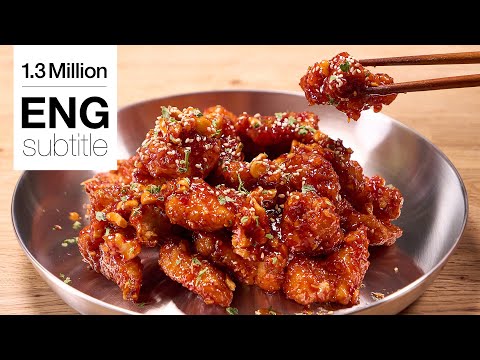
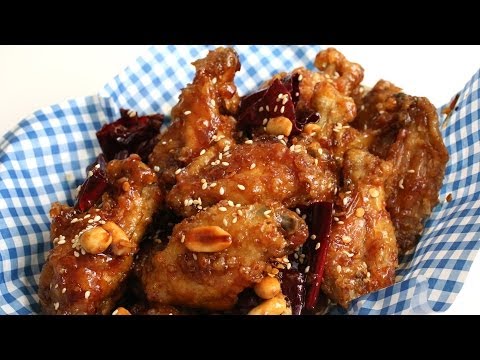
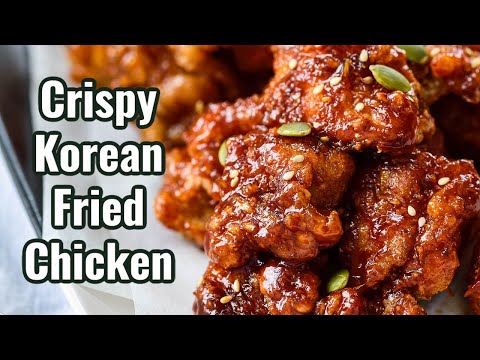
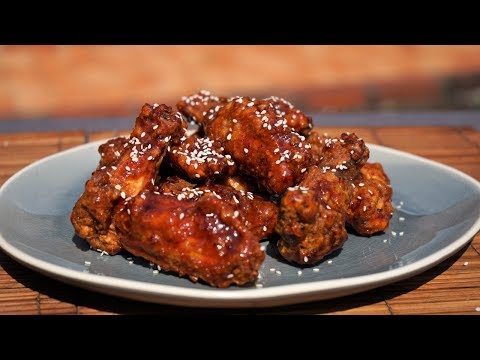
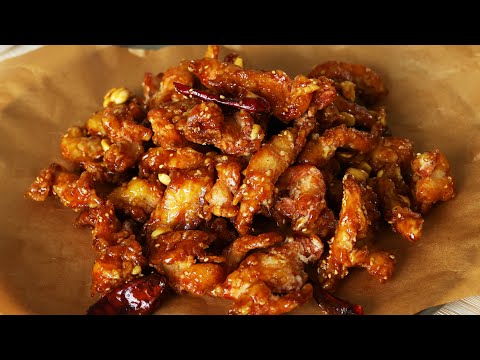
Korean Fried Chicken (Dakgangjeong) - Sweet and Crunchy
Korean Fried Chicken (Dakgangjeong) - Sweet and Crunchy is a intermediate Korean recipe that serves 4. 450 calories per serving.
Prep: 30 min | Cook: 30 min | Total: 1 hr 10 min
Cost: $13.65 total, $3.41 per serving
Ingredients
- 2 pounds Chicken wings (Cut in half at the joint)
- 0.5 teaspoon Salt (For seasoning chicken)
- to taste Ground black pepper (For seasoning chicken)
- 1 teaspoon Fresh ginger (Grated or finely minced)
- 2/3 cup Potato starch (For coating chicken; can substitute with corn starch)
- Enough for deep frying Grapeseed oil (Use for frying chicken)
- 4 cloves Garlic cloves (Minced for sauce)
- 2 pieces Dried red chili peppers (Seeds removed for less heat; optional but recommended)
- 1/4 cup Soy sauce (For sauce)
- 1/2 cup Mulyeot (Korean rice syrup) (Sweetener for sauce; can substitute with corn syrup or honey)
- 1 tablespoon Rice vinegar (For tanginess in sauce)
- 1 tablespoon Mustard sauce (Adds special flavor to sauce; optional)
- 1 tablespoon Brown sugar (For sweetness and shine in sauce)
- 1/4 cup Peanuts (Lightly fried for garnish and extra crunch; optional)
- 1 teaspoon Sesame seeds (For garnish)
Instructions
Prepare Chicken Wings
Cut chicken wings in half at the joint if not pre-cut. Rinse the chicken pieces under cold water a couple of times to clean. Pat dry thoroughly with paper towels to remove excess moisture.
Time: PT10M
Season Chicken
Place the chicken pieces in a mixing bowl. Add 1/2 teaspoon salt, ground black pepper to taste, and 1 teaspoon grated fresh ginger. Mix well using your hands to evenly coat the chicken pieces.
Time: PT5M
Coat Chicken with Potato Starch (First Layer)
Add 1/3 cup potato starch to the bowl. Coat each chicken piece lightly and evenly with the starch one by one to avoid clumping.
Time: PT5M
Add More Potato Starch (Second Layer)
Add another 1/3 cup potato starch to the bottom of the bowl. Stir the chicken pieces in the starch and watery mixture at the bottom to coat them well, ensuring an even and slightly thicker coating.
Time: PT5M
Heat Oil for Frying
Pour grapeseed oil into a deep frying pot to a depth sufficient for deep frying (about 3-4 inches). Heat the oil to 175°C (350°F).
Time: PT10M
Temperature: 175°C
First Fry - Fry Chicken Pieces
Fry the coated chicken pieces in batches to avoid overcrowding. Fry for about 12 minutes at 175°C until the chicken is cooked through and the coating is crispy and golden. Remove and drain on paper towels.
Time: PT12M
Temperature: 175°C
Second Fry - Crisp the Chicken
Lower the heat slightly to about 160°C (320°F). Return the chicken pieces to the hot oil and fry again until the coating becomes very crunchy and golden brown, about 5-8 minutes. Turn pieces as needed for even crispiness. Remove and drain on paper towels.
Time: PT8M
Temperature: 160°C
Fry Peanuts (Optional)
In the same hot oil, fry 1/4 cup peanuts for about 30 seconds until they turn white and crispy. Remove and drain on paper towels. Be careful as oil may splatter.
Time: PT1M
Temperature: 160°C
Prepare Sauce
In a small saucepan, heat 2 tablespoons of cooking oil over medium heat. Add minced garlic and dried red chili peppers (seeds removed). Stir and cook until fragrant, about 1-2 minutes.
Time: PT3M
Temperature: Medium heat
Add Sauce Ingredients
Add 1/4 cup soy sauce, 1/2 cup mulyeot (Korean rice syrup), 1 tablespoon rice vinegar, 1 tablespoon mustard sauce (optional), and 1 tablespoon brown sugar to the saucepan. Lower heat and stir to combine and dissolve sugar. Cook until sauce thickens slightly and becomes shiny, about 3-5 minutes.
Time: PT5M
Temperature: Low heat
Combine Chicken and Sauce
Add the double-fried chicken pieces and fried peanuts (if using) to the saucepan. Toss well to coat all pieces evenly with the sauce. Sprinkle with sesame seeds for garnish.
Time: PT3M
Nutrition Facts
- Calories
- 450
- Protein
- 30g
- Carbohydrates
- 25g
- Fat
- 25g
- Fiber
- 2g
Dietary info: Gluten-Free if using gluten-free soy sauce, Dairy-Free, high-protein
Allergens: Peanuts, Soy, Mustard
Ingredient Substitutions
- Instead of Chicken wings: Chicken drumsticks, Chicken chunks
- Instead of Salt: Sea salt, Kosher salt
- Instead of Ground black pepper: White pepper
- Instead of Fresh ginger: Ground ginger (use less)
- Instead of Potato starch: Corn starch
- Instead of Grapeseed oil: Vegetable oil, Canola oil
- Instead of Garlic cloves: Garlic powder (less flavor)
- Instead of Dried red chili peppers: Red pepper flakes
- Instead of Soy sauce: Tamari, Coconut aminos
- Instead of Mulyeot (Korean rice syrup): Corn syrup, Honey
- Instead of Rice vinegar: Apple cider vinegar
- Instead of Mustard sauce: Dijon mustard, Yellow mustard
- Instead of Brown sugar: White sugar, Honey
- Instead of Peanuts: Cashews, Almonds
- Instead of Sesame seeds: Toasted sesame seeds
Equipment Needed
- Cutting board
- Knife
- Mixing bowl
- Tongs
- Deep frying pot or heavy-bottomed pot
- Measuring cups and spoons
- Small saucepan or skillet
- Paper towels
Critical Steps — Do Not Skip
- Prepare Chicken Wings
- Season Chicken
- Coat Chicken with Potato Starch (First Layer)
- Add More Potato Starch (Second Layer)
- Heat Oil for Frying
- First Fry - Fry Chicken Pieces
- Second Fry - Crisp the Chicken
- Prepare Sauce
- Add Sauce Ingredients
- Combine Chicken and Sauce
Chef Tips from the Video
- Double frying is key to achieving a crunchy texture that lasts.
- Use potato starch instead of corn starch for extra crispiness.
- Remove chili seeds to control spice level without losing flavor.
- Frying peanuts adds a nice texture contrast and nutty flavor.
- Serve immediately for best crunch, but leftovers can be reheated in the oven.
Troubleshooting
Chicken coating becomes soggy after frying.
Ensure chicken is patted dry before coating. Double fry at correct temperatures. Avoid overcrowding the frying pot.
Chicken is undercooked inside.
Fry chicken for full 12 minutes during first fry. Use a thermometer to check internal temperature (should reach 75°C).
Sauce is too runny.
Cook sauce longer on low heat to reduce and thicken. Add a little more brown sugar to help thicken and shine.
Storage
Refrigerator: Store leftover chicken in an airtight container for up to 2 days. Reheat in an oven to restore crispiness.
Freezer: Not recommended due to loss of crispiness.
Room temperature: Best served immediately; do not leave at room temperature for more than 2 hours.
Make-Ahead Tips
- Prepare sauce in advance and reheat before tossing with chicken.
- Coat chicken and refrigerate for up to 1 hour before frying.
Frequently Asked Questions
What is the cultural significance and history of Korean Fried Chicken (Dakgangjeong) - Sweet and Crunchy in Korean cuisine?
Korean Fried Chicken (Dakgangjeong) originated in the 1970s when South Koreans began experimenting with deep‑fried chicken coated in sweet and spicy sauces. It quickly became a popular anju, or drinking snack, especially paired with beer, and symbolizes modern Korean street food culture. The dish reflects Korea’s love for bold flavors and crunchy textures, and it is now a staple at gatherings and night markets.
What are the traditional regional variations of Korean Fried Chicken (Dakgangjeong) in Korea?
While the basic sweet‑spicy glaze is common nationwide, regional twists exist: in Busan, a hint of gochujang and garlic is added; in Jeju, local citrus juice brightens the sauce; and in Seoul’s trendy districts, chefs may incorporate honey or corn syrup for extra gloss. Each variation still relies on the double‑fried, crunchy coating that defines Dakgangjeong.
How is Korean Fried Chicken (Dakgangjeong) - Sweet and Crunchy authentically served in Korean street food culture?
Authentic Korean Fried Chicken (Dakgangjeong) is served hot, tossed in a glossy glaze, and sprinkled with sesame seeds and chopped peanuts for texture. It is typically presented on a paper tray or in a small metal basket, accompanied by pickled radish (danmuji) and a cold glass of beer or soju. The dish is meant to be shared and eaten with chopsticks or small tongs.
What occasions or celebrations is Korean Fried Chicken (Dakgangjeong) traditionally associated with in Korean culture?
Dakgangjeong is a favorite at casual gatherings such as house parties, late‑night study sessions, and sports viewing events. It is also commonly served during Chuseok (Korean Thanksgiving) and Seollal (Lunar New Year) as a festive finger food, and many Koreans consider it a perfect accompaniment to "술" (alcohol) during celebrations.
How does Korean Fried Chicken (Dakgangjeong) - Sweet and Crunchy fit into the broader Korean cuisine tradition?
The dish exemplifies Korean cuisine’s balance of sweet, spicy, and savory flavors, as well as its emphasis on texture contrast. It showcases the Korean technique of double‑frying to achieve a light, crisp crust, a method also used in other Korean fried foods like twigim. Dakgangjeong’s sauce, often made with gochujang, garlic, and ginger, reflects the nation’s love for bold, layered seasonings.
What are the authentic traditional ingredients for Korean Fried Chicken (Dakgangjeong) versus acceptable substitutes?
Traditional ingredients include chicken wings, Korean potato starch (sweet potato starch), gochujang (Korean red pepper paste), honey or corn syrup, soy sauce, garlic, ginger, and sesame seeds. Acceptable substitutes are cornstarch for potato starch, maple syrup for honey, and a mix of chili flakes with tomato paste if gochujang is unavailable, though the flavor profile will shift slightly.
What other Korean dishes pair well with Korean Fried Chicken (Dakgangjeong) - Sweet and Crunchy?
Dakgangjeong pairs nicely with Korean side dishes such as kimchi, pickled radish (danmuji), and fresh lettuce wraps for bite‑size tacos. It also complements cold noodle dishes like mul naengmyeon and hearty soups such as doenjang jjigae, offering a contrast between the crispy chicken and soothing broth.
What are the most common mistakes to avoid when making Korean Fried Chicken (Dakgangjeong) - Sweet and Crunchy at home?
Common mistakes include overcrowding the pan, which drops oil temperature and yields soggy coating, and using too much flour or starch, which creates a gummy crust. Also, adding the glaze too early can make the chicken lose its crunch, and not letting the chicken rest after the first fry can cause uneven texture.
Why does this Korean Fried Chicken (Dakgangjeong) - Sweet and Crunchy recipe use double‑frying instead of a single fry?
Double‑frying removes excess moisture from the chicken’s surface after the first fry, creating a dry canvas that absorbs the glaze without becoming soggy. The second, hotter fry quickly seals the coating, giving the signature ultra‑crisp exterior that stays crunchy even after the sauce is tossed on.
What is known about the YouTube channel that posted the Korean Fried Chicken (Dakgangjeong) - Sweet and Crunchy recipe?
The YouTube channel that posted this Korean Fried Chicken (Dakgangjeong) - Sweet and Crunchy video focuses on quick, home‑cooked Asian recipes and often emphasizes easy shortcuts for busy cooks. Its style blends clear step‑by‑step visuals with cultural tidbits, aiming to make authentic Korean flavors accessible to a global audience.
Last updated: August 20, 2026