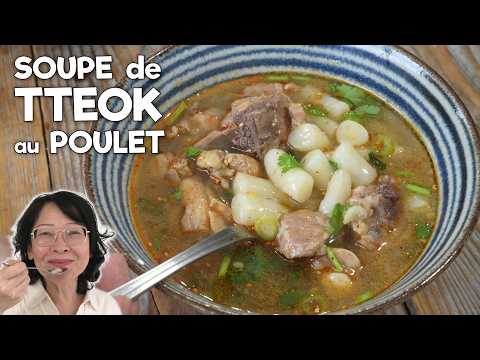
Soupe coréenne anti-gueule de bois (Leangook)
Soupe coréenne anti-gueule de bois (Leangook) is a medium Korean recipe that serves 4. 250 calories per serving. Recipe by LE RIZ JAUNE on YouTube.
Prep: 25 min | Cook: 2 hrs 30 min | Total: 3 hrs 10 min
Cost: $24.02 total, $6.01 per serving
Ingredients
- 1 kg Plat de côte de bœuf (ou jarret, queue) (Couper en gros cubes de 3‑4 cm)
- 500 g Chou chinois (Napa cabbage) (Couper en 4 bandes longitudinales)
- 200 g Germes de soja (Rincer rapidement avant utilisation)
- 2 tiges Cébette (oignon vert) (Couper en rondelles fines pour la garniture)
- 4 gousses Ail (Écraser puis hacher grossièrement)
- 20 g Gingembre frais (Trancher en fines lamelles)
- 1 pièce Oignon jaune (Éplucher et couper en deux)
- 300 g Navet blanc (Éplucher, couper en tranches de 5 mm)
- 2 c. à soupe Sauce soja (Tamari si vous voulez réduire le gluten)
- 1 c. à soupe Sauce poisson (Ajoute de l'umami et du sel)
- 1 c. à café Huile de sésame (Arôme grillé, à ajouter en fin de cuisson)
- 1 c. à café Gochugaru (piment coréen en poudre) (Ajuster selon le niveau de piquant désiré)
- 1 c. à café Sel
- 3 L Eau (Pour le bouillon)
Instructions
Couper la viande
Coupez le plat de côte de bœuf en gros cubes d'environ 3‑4 cm de côté.
Time: PT5M
Préparer les légumes
Coupez le chou chinois en 4 bandes longitudinales, tranchez la cébette en rondelles, épluchez le navet et coupez‑le en tranches de 5 mm, hachez l'ail, tranchez le gingembre et coupez l'oignon en deux.
Time: PT15M
Faire bouillir la viande
Dans la grande casserole, versez 3 L d'eau, ajoutez les cubes de viande, portez à ébullition et écumez les impuretés pendant 5 minutes.
Time: PT10M
Temperature: 100°C
Mijoter avec aromates
Ajoutez l'oignon, le gingembre et 1 c. à café de sel, couvrez, réduisez le feu et laissez frémir doucement pendant 2 heures.
Time: PT2H
Temperature: 90°C
Retirer les aromates
Retirez l'oignon et le gingembre du bouillon à l'aide d'une écumoire.
Time: PT2M
Préparer l'assaisonnement
Dans un bol, mélangez l'ail haché, 1 c. à soupe de gochugaru, 1 c. à café d'huile de sésame et une louche de bouillon. Délayez bien.
Time: PT5M
Cuisson des légumes
Versez le mélange d'assaisonnement dans la casserole, ajoutez le navet et le chou chinois, couvrez et laissez cuire 20 minutes à frémissement.
Time: PT20M
Temperature: 90°C
Finition et assaisonnement final
Ajoutez les germes de soja, 2 c. à soupe de sauce soja et 1 c. à soupe de sauce poisson. Goûtez et rectifiez l'assaisonnement (sel, gochugaru ou huile de sésame) si besoin.
Time: PT5M
Service
Répartissez la soupe dans des bols, parsemez de rondelles de cébette et servez immédiatement, éventuellement avec du riz nature.
Time: PT2M
Nutrition Facts
- Calories
- 250
- Protein
- 20 g
- Carbohydrates
- 15 g
- Fat
- 8 g
- Fiber
- 3 g
Dietary info: Contient de la viande, Non végétarien, Non végan, Contient du gluten (sauce soja standard), low-carb, low-calorie, low-fat
Allergens: Soja, Poisson, Sésame
Last updated: April 17, 2026