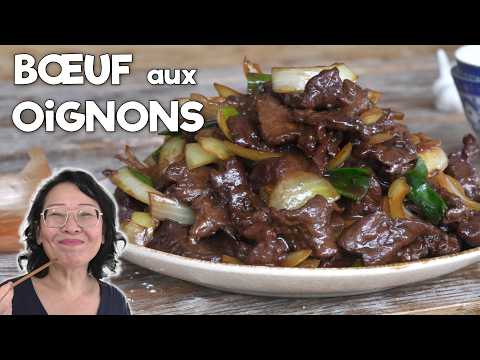
Bœuf sauté aux oignons à la chinoise
Bœuf sauté aux oignons à la chinoise is a medium Chinoise recipe that serves 3. 400 calories per serving. Recipe by LE RIZ JAUNE on YouTube.
Prep: 52 min | Cook: 5 min | Total: 1 hr 7 min
Cost: $101.97 total, $33.99 per serving
Ingredients
- 400 g Steak de bœuf (type bavette ou rumsteck) (Tranché finement en lamelles de 2‑3 mm)
- 4 c. à soupe Sauce soja claire (Environ 60 ml)
- 2 c. à soupe Sauce soja noire (Environ 30 ml, apporte couleur et richesse)
- 2 c. à soupe Sauce d'huître (Environ 30 ml)
- ½ c. à café Bicarbonate de soude (cuisine) (Environ 2 g, aide à attendrir la viande)
- 1 c. à soupe Fécule de pomme de terre (Environ 10 g, pour enrober la viande)
- 1 c. à soupe Huile neutre (tournesol ou arachide) (Pour la marinade)
- 1 pièce Oignon moyen (Émincé en lamelles de 4‑5 mm)
- 1 pièce Gousse d'ail (Hachée finement)
- 2 c. à soupe Huile de cuisson (arachide ou tournesol) (Pour la sauteuse)
- 1 c. à café Sucre blanc (Équilibre le salé)
- 5 cl Eau (Pour diluer la sauce)
- ¼ c. à café Poivre noir moulu (Au goût)
- 1 c. à café Huile de sésame (À ajouter en fin de cuisson pour le parfum)
Instructions
Émincer le bœuf
Coupez le steak en fines lamelles d’environ 2‑3 mm d’épaisseur, en les séparant légèrement pour éviter qu’elles ne collent.
Time: PT5M
Mariner la viande
Dans le saladier, mélangez la sauce soja claire, la sauce soja noire, la sauce d’huître, le bicarbonate de soude, la fécule de pomme de terre et l’huile neutre. Ajoutez les lamelles de bœuf et mélangez bien pour enrober chaque morceau. Laissez reposer 30 minutes à température ambiante.
Time: PT35M
Préparer les aromatiques
Émincez l’oignon en lamelles de 4‑5 mm d’épaisseur. Hachez finement la gousse d’ail.
Time: PT5M
Préparer la sauce de cuisson
Dans un petit bol, mélangez 2 c. à soupe de sauce soja claire, 1 c. à soupe de sauce soja noire, 1 c. à soupe de sauce d’huître, 1 c. à café de sucre, 5 cl d’eau et le poivre. Réservez.
Time: PT5M
Saisir le bœuf
Faites chauffer la sauteuse à feu moyen avec 2 c. à soupe d’huile. Quand l’huile est bien chaude, ajoutez le bœuf mariné et saisissez‑le 1 minute en remuant rapidement. Retirez le bœuf et réservez, en gardant l’huile dans la sauteuse.
Time: PT1M
Temperature: feu moyen
Faire revenir l'ail
Ajoutez l’ail haché dans l’huile chaude et faites‑le revenir 10 secondes, juste le temps qu’il libère son arôme.
Time: PT0M10S
Temperature: feu moyen
Cuire l'oignon
Ajoutez l’oignon émincé et faites‑le sauter 1 minute, il doit rester légèrement croquant.
Time: PT1M
Temperature: feu moyen
Mijoter le tout
Remettez le bœuf dans la sauteuse, versez la sauce de cuisson préparée, mélangez bien et laissez cuire 1‑2 minutes pour que la sauce nappe la viande et les légumes.
Time: PT2M
Temperature: feu moyen
Finition et service
Arrosez le plat d’un filet d’huile de sésame, mélangez une dernière fois et servez immédiatement avec du riz blanc vapeur.
Time: PT30S
Nutrition Facts
- Calories
- 400
- Protein
- 25 g
- Carbohydrates
- 10 g
- Fat
- 20 g
- Fiber
- 1 g
Dietary info: Non végétarien, Riche en protéines, Sans lactose, low-carb, keto-friendly
Allergens: Soja, Sésame, Gluten (sauce soja), Huîtres
Ingredient Substitutions
- Instead of Steak de bœuf (type bavette ou rumsteck): Filet de poulet, Escalope de dinde
- Instead of Sauce soja claire: Tamari (sans gluten)
- Instead of Sauce soja noire: Sauce soja foncée maison
- Instead of Sauce d'huître: Sauce aux champignons, Sauce soja + un peu de sucre
- Instead of Bicarbonate de soude (cuisine): Poudre à lever (en petite quantité)
- Instead of Fécule de pomme de terre: Maïzena, Fécule de maïs
- Instead of Huile neutre (tournesol ou arachide): Huile de colza
- Instead of Oignon moyen: Échalote, Poireau (partie blanche)
- Instead of Gousse d'ail: Ail en poudre (¼ c. à café)
- Instead of Huile de cuisson (arachide ou tournesol): Huile de canola
- Instead of Sucre blanc: Miel (½ c. à café), Sucre de canne
- Instead of Poivre noir moulu: Poivre blanc
- Instead of Huile de sésame: Huile de sésame grillée
Equipment Needed
- Couteau de chef
- Planche à découper
- Saladier (bol moyen)
- Cuillères à soupe (mesure)
- Sauteuse ou wok
- Spatule en bois ou silicone
- Petit bol pour la sauce de cuisson
Critical Steps — Do Not Skip
- Mariner la viande avec le bicarbonate de soude pour garantir une texture très tendre.
- Saisir le bœuf rapidement à feu moyen pour éviter qu’il ne se dessèche.
- Ne pas trop cuire l’oignon afin qu’il conserve son croquant.
- Ajouter l’huile de sésame en fin de cuisson pour préserver son arôme.
Chef Tips from the Video
- Placez la viande au congélateur 15 minutes avant de la trancher pour obtenir des lamelles ultra‑fines.
- Utilisez un wok bien chaud pour obtenir le fameux « wok‑hei » (arôme de fumée).
- Ajoutez l’huile de sésame juste avant de servir pour préserver son parfum délicat.
Troubleshooting
Le bœuf est dur après cuisson
Vérifiez que le bicarbonate a bien été ajouté et que la viande a reposé 30 minutes. Saisissez le bœuf seulement 1 minute à feu moyen.
Les oignons sont trop mous
Cuisez-les seulement 1 minute à feu moyen et retirez-les dès qu’ils deviennent translucides.
La sauce est trop salée
Ajoutez un peu d’eau supplémentaire ou un soupçon de sucre pour équilibrer.
Storage
Refrigerator: Conservez les restes dans un récipient hermétique 2 à 3 jours.
Freezer: Le plat se congèle jusqu’à 1 mois ; décongelez au réfrigérateur avant de réchauffer.
Room temperature: Ne pas laisser à température ambiante plus de 2 heures.
Make-Ahead Tips
- Préparez la marinade la veille et laissez la viande reposer au réfrigérateur ; cela intensifie la tendreté.
- La sauce de cuisson peut être faite à l’avance et conservée 2 jours au frais.
Frequently Asked Questions
What is the cultural significance and history of Bœuf sauté aux oignons à la chinoise in Chinese cuisine?
Bœuf sauté aux oignons à la chinoise is a modern adaptation of classic Chinese stir‑fry beef dishes that date back to the Qing dynasty, when beef became more widely consumed in northern China. The dish highlights the Chinese emphasis on quick, high‑heat cooking to preserve texture and flavor. It reflects the fusion of traditional techniques with contemporary home‑cooking trends.
What are the traditional regional variations of Bœuf sauté aux oignons à la chinoise within Chinese cuisine?
In northern Chinese provinces, the beef is often marinated with wheat‑based sauces and paired with scallions, while in Sichuan the dish may include spicy doubanjiang and peppercorns. Cantonese versions favor a lighter soy‑and‑oyster sauce and add ginger for sweetness. Each region adjusts the aromatics and sauce balance to suit local palates.
How is Bœuf sauté aux oignons à la chinoise authentically served in traditional Chinese meals?
Traditionally, Bœuf sauté aux oignons à la chinoise is served hot, directly from the wok, over steamed white rice or alongside a bowl of congee. It is presented on a large communal plate so diners can share, reflecting the Chinese value of communal dining. A drizzle of toasted sesame oil is added just before serving for aroma.
During which occasions or celebrations is Bœuf sauté aux oignons à la chinoise traditionally associated in Chinese culture?
While not tied to a specific festival, the dish is popular at family gatherings and Lunar New Year feasts because its bright color and savory flavor symbolize prosperity and abundance. It is also a staple at business banquets where quick, impressive dishes are valued. The use of beef is considered a sign of wealth in many Chinese celebrations.
How does Bœuf sauté aux oignons à la chinoise fit into the broader Chinese cuisine tradition of stir‑fry dishes?
Stir‑frying is a cornerstone of Chinese culinary technique, emphasizing speed, high heat, and minimal oil to lock in flavor and crunch. Bœuf sauté aux oignons à la chinoise exemplifies this by quickly searing thinly sliced beef and crisp onions, creating a balance of umami from soy and oyster sauces with the freshness of garlic. It showcases the Chinese principle of "yin‑yang" balance between protein and vegetables.
What are the authentic traditional ingredients for Bœuf sauté aux oignons à la chinoise versus acceptable modern substitutes?
Authentic ingredients include thinly sliced beef (preferably flank or sirloin), light and dark soy sauce, oyster sauce, Shaoxing wine, and a splash of toasted sesame oil. Modern cooks may substitute soy sauce with low‑sodium versions, use mushroom‑based oyster sauce for a vegetarian twist, or replace Shaoxing wine with dry sherry. The core flavor profile remains the same as long as the salty‑sweet‑umami balance is preserved.
What other Chinese dishes pair well with Bœuf sauté aux oignons à la chinoise for a balanced meal?
A light vegetable side such as stir‑fried bok choy with garlic, a cold cucumber salad dressed in rice vinegar, and a simple egg drop soup complement the rich beef. For starch, steamed jasmine rice or fragrant fried rice provides a neutral base. These pairings balance texture, temperature, and flavor in a traditional Chinese banquet.
What makes Bœuf sauté aux oignons à la chinoise special or unique within Chinese cuisine?
The dish’s uniqueness lies in the use of baking soda (bicarbonate of soda) to tenderize the beef, a technique less common in home cooking but prized in professional Chinese kitchens for achieving an ultra‑tender texture. Additionally, the combination of both light and dark soy sauces creates depth of color and flavor that distinguishes it from simpler stir‑fries. The quick high‑heat sear locks in juices while keeping the onions crisp.
What are the most common mistakes to avoid when making Bœuf sauté aux oignons à la chinoise at home?
Avoid overcrowding the wok, which steams the beef instead of searing it, resulting in a loss of the desired caramelized crust. Do not over‑marinate the beef with baking soda for more than 15 minutes, as it can become mushy. Finally, keep the heat at a high, steady level; lowering the temperature will cause the vegetables to become soggy rather than crisp.
Why does this Bœuf sauté aux oignons à la chinoise recipe use bicarbonate of soda for tenderizing instead of a longer marination with soy sauce alone?
Bicarbonate of soda raises the pH on the surface of the meat, weakening protein bonds and allowing the fibers to break down quickly, which yields a tender bite in just minutes. A longer soy‑only marination would add flavor but does not achieve the same rapid tenderness. This technique mirrors professional wok chefs who need fast, consistent results during busy service.
What does the YouTube channel LE RIZ JAUNE specialize in?
The YouTube channel LE RIZ JAUNE specializes in accessible Asian home‑cooking, focusing on Chinese, Thai, and Vietnamese recipes that can be prepared with everyday ingredients. The creator emphasizes clear step‑by‑step instructions, cultural context, and budget‑friendly tips. Each video aims to demystify Asian flavors for a global audience.
What is the cooking philosophy and style of the YouTube channel LE RIZ JAUNE when presenting Chinese recipes like Bœuf sauté aux oignons à la chinoise?
LE RIZ JAUNE follows a philosophy of authenticity blended with practicality, teaching traditional Chinese techniques while adapting them for home kitchens. The style is personable and instructional, often explaining the why behind each step, such as the use of baking soda for tenderizing. The channel also highlights cultural stories to give viewers a deeper appreciation of each dish.
Last updated: August 22, 2026